Why Your Pizza Crust is Dense and Not Airy [Causes & Solutions]
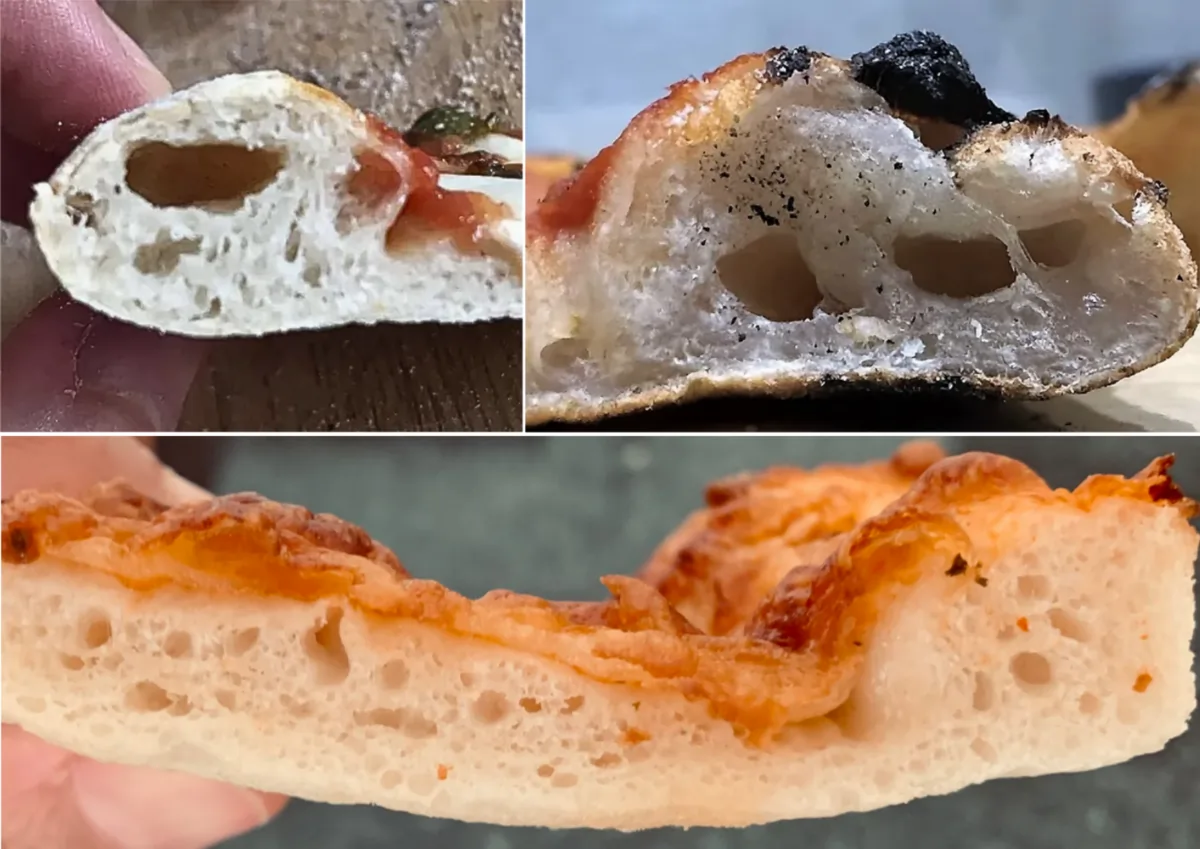
A pizza crust that is dense and not airy lacks a light, open crumb, resulting in a heavy and bread-like texture rather than an open-structured, bubbly one. This is mostly a result of improper fermentation or improper stretching technique. This page details the exact causes and provides actionable solutions for achieving a light, airy, and professional-quality crust
This page is part of PizzaBlab’s Pizza Making Troubleshooting Guide. It provides a practical overview of the most common causes for this problem, each with a brief explanation, actionable solution, and links to related articles for deeper understanding.
The sections are listed from most to least likely, meaning the first cause typically represents the most common reason for this issue, with likelihood decreasing as you move down the list. That said, several causes can often overlap or share similar likelihoods – it’s ultimately up to your process to identify which factors are at play.
Cause 1: The Dough Was Under-Fermented When Baked
Explanation:
In an under-fermented dough, insufficient CO₂ is produced by the yeast during fermentation, leading to a dense dough structure with limited expansion. As a result, the crust fails to rise properly during baking (limited oven spring), which leads to a dense, closed crumb structure.
Solution:
Use the dough at its optimal fermentation point and avoid baking dough that hasn’t fermented enough (see: The Dough Ferments Too Slowly or Not at All (Under-Fermentation)).
Read More:
- Oven Spring In Baking
- Yeast Activity During Fermentation
- How to Tell if the Dough is Ready for Baking: 4 Dough Fermentation Tests
Cause 2: Improper Stretching Technique
Explanation:
Flattening the crust’s edges (the rim/’cornicione’) during stretching can force out gas or “puncture” the air pockets formed during fermentation. This prevents proper expansion in the oven, leading to a flat and/or dense crust.
Solution:
Ensure proper stretching technique and avoid using a rolling pin (unless making cracker-style pizza).
Cause 3: Dough Was Too Elastic When Baked
Explanation:
Gluten that is too elastic when baked can resist stretching and expanding, resulting in a tighter, more closed-structured crumb than desired.
Solution:
Aim for a more extensible, less elastic dough at the time of baking (for example, by fermenting longer in balls – see articles below).
Read More:
- Factors Affecting Dough Elasticity and Extensibility
- Effects of Bulk and Ball Fermentation on Dough Behavior (Elasticity and Extensibility)
Cause 4: Over-Mixing or Too Many Stretch & Folds
Explanation:
The more you knead/mix the dough, and the more stretch & fold sessions you perform, the tighter and more elastic the gluten becomes. Over-mixing or performing too many folds can make the dough overly elastic, resulting in a tighter, more closed-structured crumb than desired.
Solution:
Knead or mix less, and/or reduce the number of stretch and fold sessions.
Read More:
- Pizza Dough Mixing and Kneading Fundamentals: A Guide to the Most Important Step in Dough Making
- Stretch and Folds (Dough Folding)
Cause 5: Flour Used Is Too Strong/Elastic
Explanation:
Using a flour that is too strong/elastic (high in protein) can lead to an overly-elastic dough, resulting in a tighter, more closed-structured crumb than desired.
Solution:
Use a weaker flour with lower protein content.
Read More:
- Gluten Quantity and Quality in Flour (“Strong” vs “Weak” Flour)
- The Impact of Protein Content of Flour on Dough and Crust Characteristics
Cause 6: Flour Used Is Too Weak
Explanation:
Flour that is too weak (such as cake or pastry flour) forms a weak gluten structure that cannot effectively trap gases during fermentation, resulting in a dense, tight crumb structure.
This also applies to wholemeal flours and other wheat varieties (like spelt or rye), whether wholemeal or white. These wheats/flours lack sufficient gluten-forming proteins to build a strong, elastic dough suitable for pizza, and wholemeal flours contain bran and germ that interfere with gluten development. While some may have higher total protein content, their gluten quality is poor, resulting in a weaker dough that’s less ideal for pizza making (see articles below).
Solution:
Use stronger (white) flour with higher protein content or one that produces a more elastic dough.
Read More:
- Gluten Quantity and Quality in Flour (“Strong” vs “Weak” Flour)
- Wholemeal, Ancient, and Other Grain Varieties as Pizza Flour
- Characteristics of Italian Flours
Cause 7: Dough Hydration Is Too Low
Explanation:
Lower-hydration doughs produce denser, less airy crusts with reduced volume due to limited oven spring. Higher-hydration doughs tend to rise more and develop a more “bubbly”, airy structure.
Solution:
Use a higher hydration level.
Note that this is only relevant if the dough was properly fermented and baked. Increasing hydration alone will not guarantee a more airy crust – proper fermentation is far more important.
Read More:
- What Is Hydration in Dough?
- The Effects of Hydration on Baking and the Final Product (Pizza or Bread)
- List of Dough Hydration Levels for Various Pizza Types and Other Baked Products
Additional Notes / Information
In most cases, a dense, closed, and non-airy crust is caused by under-fermented dough. If the dough also feels very elastic, resists or snaps back when stretched, under-fermentation is almost certainly the reason for the dense structure.
If the dough seems properly fermented, the next most likely cause is excessive elasticity at the time of baking. This can result from over-mixing, using overly strong flour, or insufficient fermentation time in balls.
← Back to PizzaBlab’s Troubleshooting Index

Enjoyed this article? Join the BLAB
Unlock the Key Takeaways above and enjoy a 100% clean, ad-free experience across the entire site.



![Why Your Pizza Crust is Dry and Crumbly [Causes & Solutions]](https://www.pizzablab.com/wp-content/uploads/2025/11/pizza-making-troubleshooting-cover-768x561.webp)