Why Your Pizza Crust is Dry and Crumbly [Causes & Solutions]
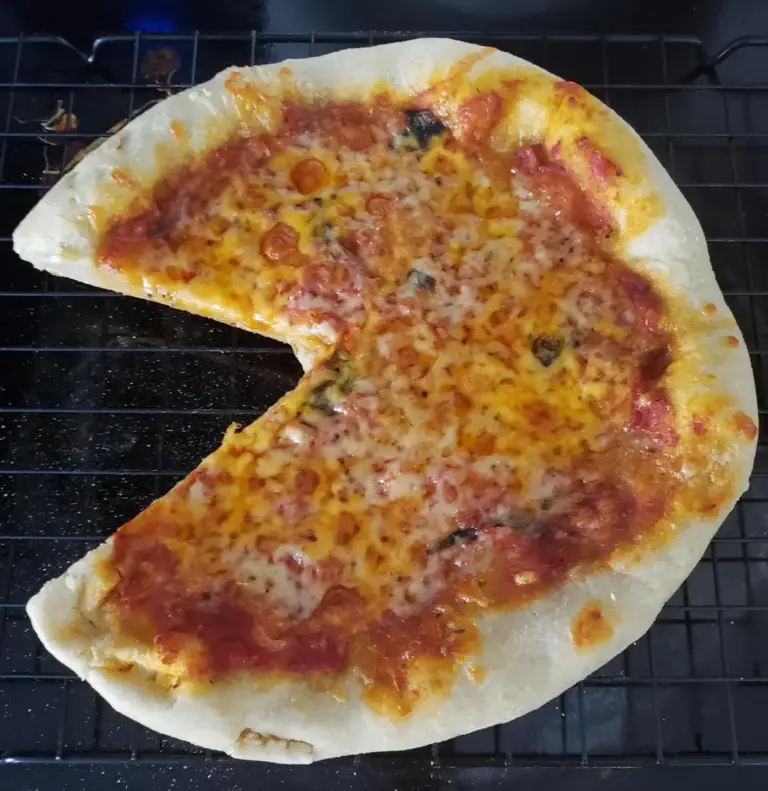
A pizza crust with a dry or crumbly interior generally indicates a problem in the baking or stretching process , resulting in a brittle texture that falls apart rather than offering a satisfying chew. This page details the exact causes and provides actionable solutions for achieving a moist, tender crust
Note: This page refers to the problem of a flat, crackery crust in cases where a cracker-style pizza is not the intended result.
This page is part of PizzaBlab’s Pizza Making Troubleshooting Guide. It provides a practical overview of the most common causes for this problem, each with a brief explanation, actionable solution, and links to related articles for deeper understanding.
The sections are listed from most to least likely, meaning the first cause typically represents the most common reason for this issue, with likelihood decreasing as you move down the list. That said, several causes can often overlap or share similar likelihoods – it’s ultimately up to your process to identify which factors are at play.
Cause 1: Improper Baking Settings – Outer Crust Sets Too Slowly, Leading to Moisture Loss in the Crumb
Explanation:
Once the crust forms, the crumb stops losing moisture. If the crust sets too slowly, too much moisture escapes from the crumb, resulting in a dry, crumbly interior.
Baking settings – including temperature, oven position, baking mode, and baking time – directly affect crust formation. Finding the ideal settings for your equipment is key to achieving even, balanced baking.
Solution:
Find the optimal baking conditions for your oven. General tips:
- Adjust dough hydration to baking temperature (see article below).
- Place the pizza on a higher rack, closer to the top heating element (if available) to promote faster crust formation.
- Adjust oven settings; for example, using convection mode can help the crust form more quickly.
Read More:
- What Is Hydration in Dough?
- The Effect of Hydration on the Baking Process
- Adjusting Hydration to the Baking Temperature
- The Importance of Balancing Top and Bottom Heat in Pizza Baking
- How to Bake Pizza in a Home Oven: Everything You Need to Know [A Practical Guide]
Cause 2: Pizza Stretched Too Thin
Explanation:
The thinner the pizza base or outer crust (rim/cornicione), the faster heat penetrates and sets the crust during baking due to the reduced internal dough mass. This results in a proportionally larger fully-baked, firm crust layer with little to no soft crumb beneath it, which can be perceived as dry, crumbly, or cracker-like.
Leaving more dough in the base and especially in the rim allows for a clearer distinction between crust and crumb layers, producing a firm exterior while retaining a soft, “moist” interior.
Solution:
Stretch the pizza to a slightly thicker base and/or intentionally leave more dough in the outer crust (rim/cornicione) during stretching.
Cause 3: The Dough Lacks Fat
Explanation:
Fat in dough helps retain moisture during baking, resulting in a softer, more tender crumb.
Adding fat addresses the symptom of a dry crumb, but does not solve the root cause, which is usually related to improper baking settings (see Cause 1).
Solution:
Add 1–4% fat to the dough (in baker’s %). Any fat works – oil, shortening, lard, etc.
Read More:
Additional Notes / Information
Note that there is no direct relation between dough hydration and the softness or tenderness of the crumb. Simply increasing hydration will not solve the problem described in this page.
For a deeper understanding, see:
- The Effect of Hydration on Crumb Moisture Content After Baking
- The Effect of Hydration on the Eating Characteristics of Baked Goods (Moistness, Softness, Airiness, and Tenderness)
← Back to PizzaBlab’s Troubleshooting Index

Enjoyed this article? Join the BLAB
Unlock the Key Takeaways above and enjoy a 100% clean, ad-free experience across the entire site.