How to Fix Wet and Sticky Pizza Dough During Kneading [Causes & Solutions]
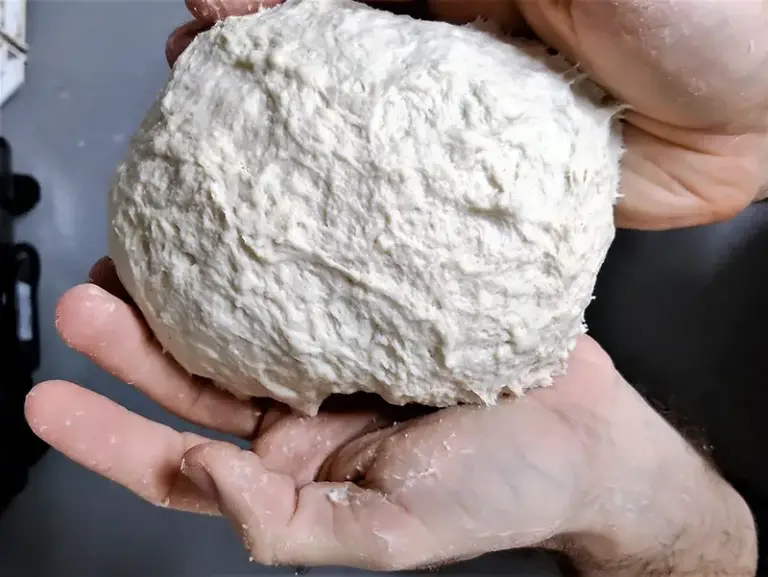
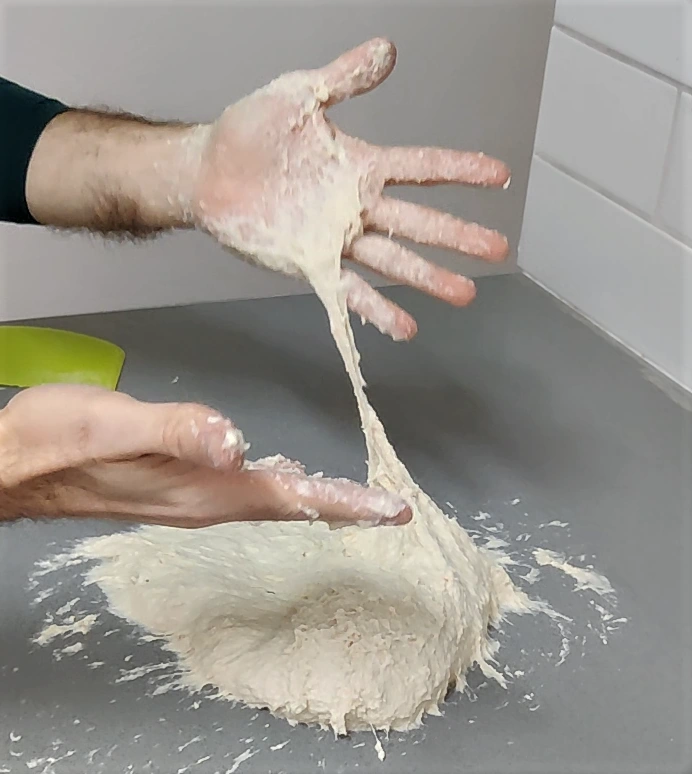
A pizza dough that feels excessively wet, sticky, and clings to your hands or the mixer during kneading is typically caused by issues with hydration level, the flour’s absorption capacity, or insufficient mixing time. This page breaks down the exact causes and provides actionable solutions to manage wet dough and achieve a proper texture
This page is part of PizzaBlab’s Pizza Making Troubleshooting Guide. It provides a practical overview of the most common causes for this problem, each with a brief explanation, actionable solution, and links to related articles for deeper understanding.
The sections are listed from most to least likely, meaning the first cause typically represents the most common reason for this issue, with likelihood decreasing as you move down the list. That said, several causes can often overlap or share similar likelihoods – it’s ultimately up to your process to identify which factors are at play.
Cause 1: Dough Hydration Too High
Explanation:
Hydration level is too high relative to the flour’s water absorption capacity, resulting in a sticky, wet dough that won’t come together.
Solution:
Lower the dough’s hydration or use flour with a higher water absorption capacity.
Read More:
- What Is Hydration in Dough?
- How Hydration Affects Dough Behavior and Handling (Before Baking)
- The Impact of Protein Content of Flour on Dough and Crust Characteristics
- List of Dough Hydration Levels for Various Pizza Types and Other Baked Products
Cause 2: All the Water Was Added to the Flour at Once – The Flour Needs More Time to Fully Hydrate
Explanation:
When all the water is added at once, especially with higher-hydration doughs, the flour becomes “overwhelmed” and doesn’t have enough time to fully absorb all the water. The result can be a sticky dough that won’t mix together until the flour has had time to properly hydrate.
Solution:
Use an autolyse or bassinage (see articles below): autolyse allows the flour to absorb all the water before kneading begins, while bassinage adds water gradually during mixing.
Additionally, cold flour hydrates (absorbs water) more slowly, so if using cold flour, letting it reach room temperature can also help ensure proper hydration.
Read More:
Cause 3: Incorrect Kneading Technique or Improper Use of the Mixer
Explanation:
Using an incorrect kneading technique or improperly operating the mixer can prevent the dough from being properly kneaded and developing gluten.
Solution:
Review the proper usage and mixing process for your equipment and dough type.
Read More:
- Guidelines for Using a Stand Mixer Effectively
- Guidelines for Using a Spiral Mixer Effectively
- How to Knead Pizza Dough: A Practical Guide [Order of Ingredients, Tips for Kneading/Mixing & More]
Cause 4: Adding Incorrect Amounts of Ingredients to the Dough
Explanation:
Improper weighing of ingredients, such as adding too much water or too little flour, can affect the dough’s hydration and make it wetter and harder to knead.
Solution:
Ensure that all ingredients are measured accurately according to the recipe/formula (especially flour and water), based on baker’s percentages. Always weigh ingredients using a kitchen scale rather than volumetric measures (cups, spoons, etc.), which are less precise.
Read More:
Cause 5: Flour Added Too Cold
Explanation:
Cold flour hydrates more slowly, delaying water absorption during mixing. This can result in a stickier dough in the early stages of kneading and can extend the required mixing time before the dough comes together properly.
Solution:
Use flour at room temperature. If temperature control is required to manage final dough temperature, adjust the water temperature instead of using cold flour.
← Back to PizzaBlab’s Troubleshooting Index

Enjoyed this article? Join the BLAB
Unlock the Key Takeaways above and enjoy a 100% clean, ad-free experience across the entire site.
![Why Your Pizza Dough Smells Like Beer or Alcohol, and How to Fix/Prevent It [Causes & Solutions]](https://www.pizzablab.com/wp-content/uploads/2025/11/pizza-making-troubleshooting-cover-768x561.webp)