Why Your Pizza Dough is Too Elastic (Shrinks or Resists Stretching) [Causes & Solutions]
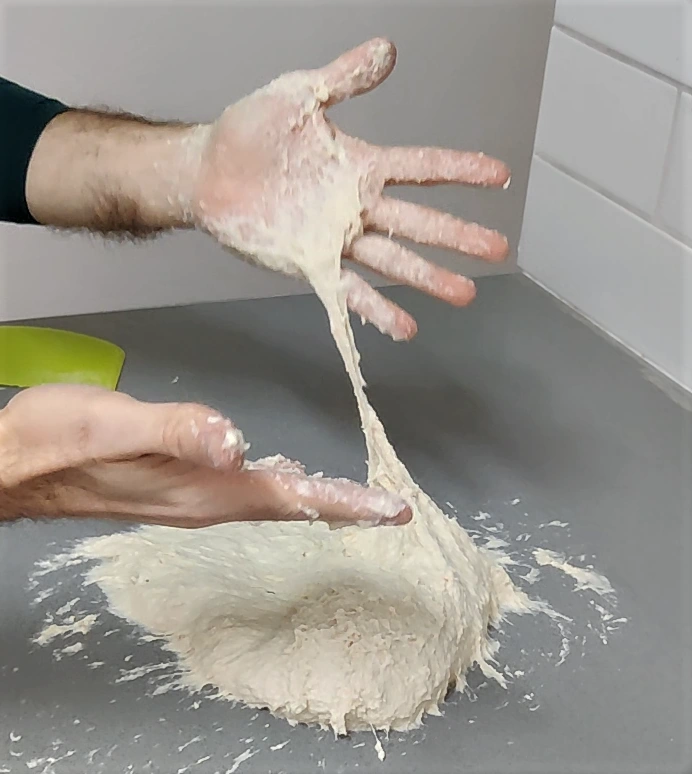
Pizza dough that is too elastic (resists stretching, shrinks, or ‘snaps back’) often leads to a small, thick, and unevenly sized pizza. This resistance is caused by excessive gluten tension (elasticity), which is nearly always a result of insufficient fermentation or over-mixing. This page details the exact causes and provides actionable solutions to make your dough less elastic and more extensible (stretchy)
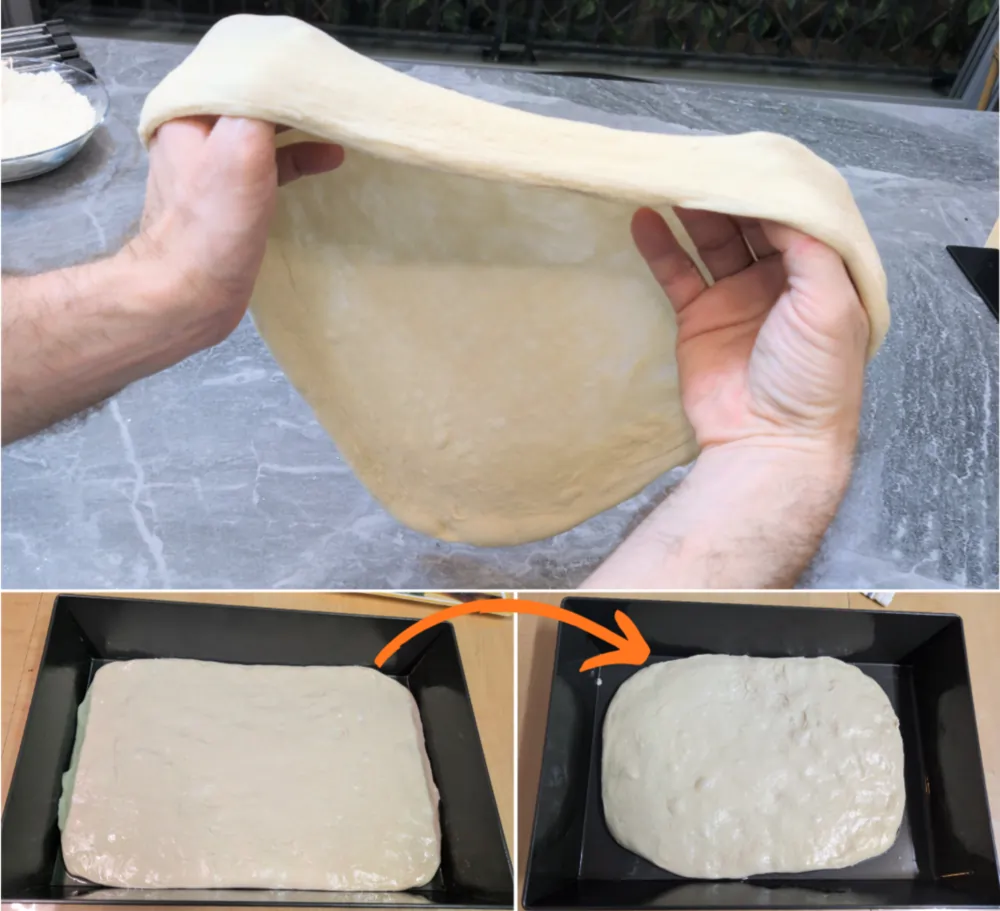
An elastic dough that shrinks after being stretched in a pan (bottom image)
This page is part of PizzaBlab’s Pizza Making Troubleshooting Guide. It provides a practical overview of the most common causes for this problem, each with a brief explanation, actionable solution, and links to related articles for deeper understanding.
The sections are listed from most to least likely, meaning the first cause typically represents the most common reason for this issue, with likelihood decreasing as you move down the list. That said, several causes can often overlap or share similar likelihoods – it’s ultimately up to your process to identify which factors are at play.
Note: A dough that resists stretching and tends to shrink is too elastic. For a deeper understanding of elasticity and extensibility in dough, see Dough Elasticity and Extensibility: Understanding the Two Most Important Properties in Pizza Dough, which is important for understanding the explanations ahead.
Cause 1: The Dough Is Under-Fermented
Explanation:
One of the signs of an under-fermented dough is excessive elasticity caused by insufficient gluten breakdown during fermentation, resulting in a dough that lacks extensibility and resists stretching.
Solution:
Use the dough at its optimal fermentation point and avoid baking dough that hasn’t fermented enough (see: The Dough Ferments Too Slowly or Not at All (Under-Fermentation)).
Read More:
Cause 2: The Dough Did Not Ferment Long Enough in Balls, Remaining Too Elastic
Explanation:
The longer the dough ferments in ball form, the less elastic and more extensible it becomes (and vice versa). Adjusting the balance between bulk and ball fermentation times allows to control the dough’s elasticity and extensibility.
Solution:
Allow the dough to ferment longer in balls, with less time spent in bulk fermentation.
Read More:
Cause 3: The Dough Is Too Cold
Explanation:
Cold dough is naturally more elastic and resistant to stretching.
Solution:
Allow the dough to warm up to at least 15°C (60°F) before stretching.
Cause 4: Flour Used Is Too Strong
Explanation:
Using a flour that is too strong (high in protein) can result in an overly-elastic dough.
Solution:
Use a weaker flour with lower protein content.
Read More:
Cause 5: Over-Mixing or Too Many Stretch & Folds
Explanation:
The more you knead/mix the dough, and the more stretch and fold sessions you perform – the tighter and more elastic the gluten becomes. Over-mixing or performing too many folds results in an overly elastic dough.
Solution:
Knead or mix less (‘minimal/improved kneading’ – see article below), and/or reduce the number of stretch and fold sessions.
Read More:
- The Three Kneading Methods (Minimal, Improved, Intensive) and Their Effect on the Final Product
- Stretch and Folds (Dough Folding)
Cause 6: Dough Hydration Is Too Low
Explanation:
Lower-hydration doughs are naturally more elastic and resistant. The higher the dough hydration is, the less elastic (and more extensible) the dough becomes.
Solution:
Use a higher hydration level.
Read More:
- What Is Hydration in Dough?
- How Hydration Affects Dough Behavior and Handling (Before Baking)
- List of Dough Hydration Levels for Various Pizza Types and Other Baked Products
Cause 7: For Pizzas Stretched in a Pan: The Dough Needs Rest Before Stretching Again
Explanation:
During stretching into the pan, the gluten tightens, making the dough more elastic. The dough requires a ‘resting’ period for the gluten to relax before it can be stretched again to fully cover the pan.
Solution:
If the dough becomes too elastic and resists stretching (shrinking back or pulling away from the edges of the pan), allow it to rest for 15–30 minutes, then stretch it again. Repeat as needed until the dough fully covers the pan (typically 2–3 times at most).
Read More:
Cause 8: A Preferment or Sourdough Starter Was Used
Explanation:
Preferments acidify the dough, strengthening gluten bonds and making it more elastic – particularly with biga or a sourdough starter.
Solution:
Reduce the amount (%) of preferment in the dough, or apply any of the solutions listed above to increase dough extensibility.
Read More:
Additional Notes / Information
In most cases, overly elastic dough stems from one of two main issues:
- Insufficient overall fermentation (maturation), which prevents gluten from “softening” and becoming sufficiently extensible, leaving the dough very elastic and resistant.
- Insufficient fermentation in balls. Balling (or reballing) the dough “resets” elasticity, making the gluten“tighter” and more resistant; if after balling the dough balls do not ferment for long enough in ball form, the gluten stays too elastic, resisting stretching.
A relatively rare situation, mostly in sourdough, high elasticity is caused by over-fermentation rather than under-fermentation. During a brief phase, the high acidity makes the dough extremely elastic, after which it “collapses” at once and loses its structure. Dough in this state will feel “bucky”, similar to trying to stretch a wet towel. If your dough is elastic and difficult to stretch and none of the more common causes apply, this may be the reason – especially in sourdough.
← Back to PizzaBlab’s Troubleshooting Index

Enjoyed this article? Join the BLAB
Unlock the Key Takeaways above, Get an ad-free experience on the entire site and direct, personal help with your dough or baking questions by becoming a member.