
Why Your Pizza Crust is Flat and Crackery [Causes & Solutions]
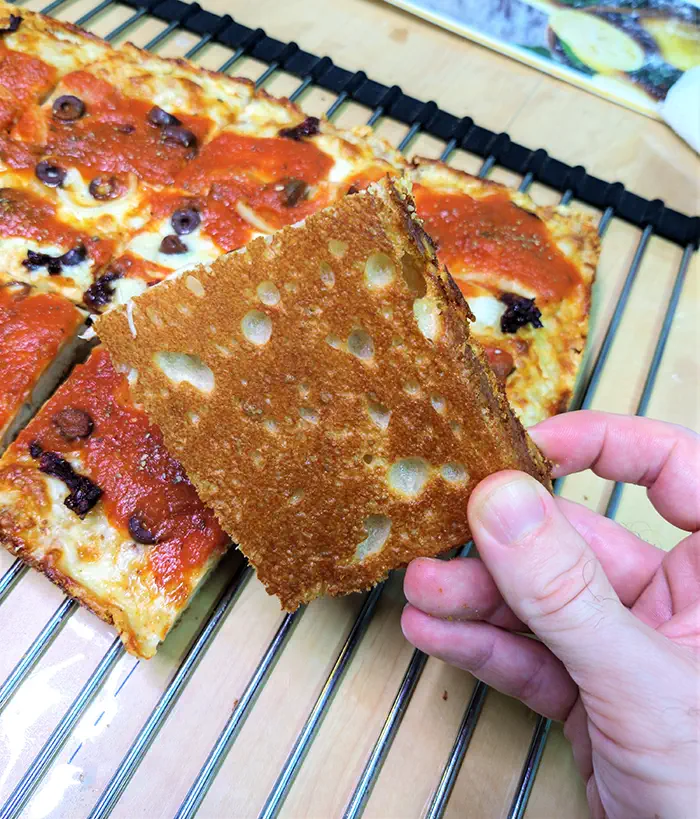
While appropriate for specific styles (such as cracker-style pizza), a crust that is flat and crackery lacks the airy, light structure of a traditional pizza, resulting in a brittle texture that shatters rather than bites. This page details the exact causes and provides actionable solutions for avoiding a flat, crackery crust

Note: This page refers to the problem of a flat, crackery crust in cases where a cracker-style pizza is not the intended result.
This page is part of PizzaBlab’s Pizza Making Troubleshooting Guide. It provides a practical overview of the most common causes for this problem, each with a brief explanation, actionable solution, and links to related articles for deeper understanding.
The sections are listed from most to least likely, meaning the first cause typically represents the most common reason for this issue, with likelihood decreasing as you move down the list. That said, several causes can often overlap or share similar likelihoods – it’s ultimately up to your process to identify which factors are at play.
Cause 1: The Dough Was Under-Fermented When Baked
Explanation:
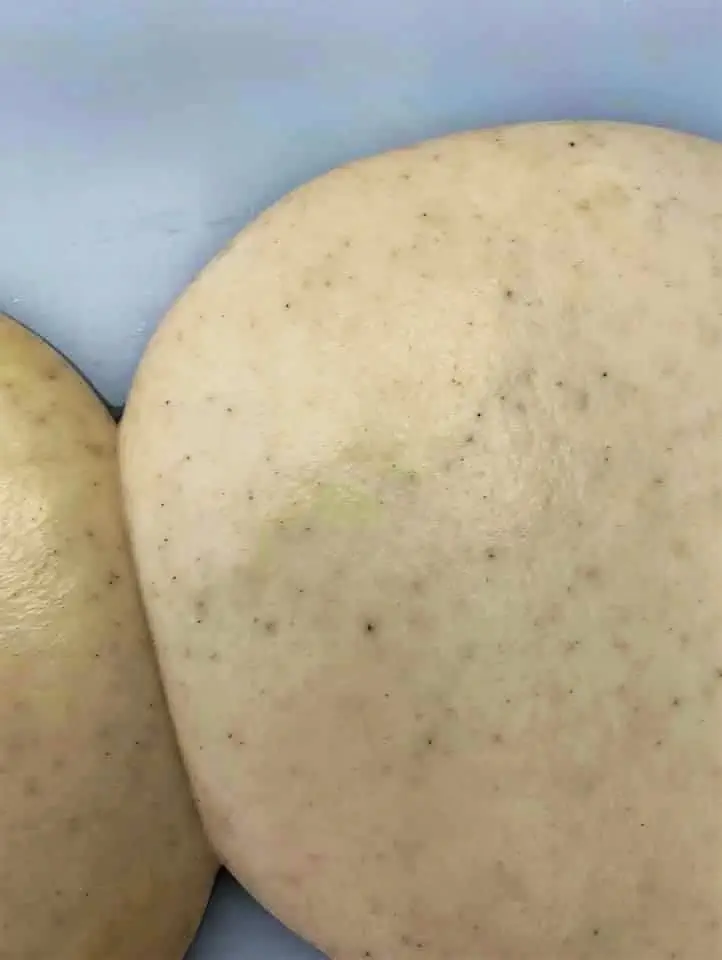
In an under-fermented dough, insufficient CO₂ is produced by the yeast during fermentation, leading to a dense dough structure with limited expansion. As a result, the dough fails to rise properly during baking (limited oven spring), which leads to a flat, crackery, non-airy crust.
Solution:
Use the dough at its optimal fermentation point and avoid baking dough that hasn’t fermented enough (see: The Dough Ferments Too Slowly or Not at All (Under-Fermentation)).
Read More:
- Oven Spring Explained
- The Fermentation and Maturation Processes in Pizza Dough
- How to Tell if the Dough is Ready for Baking: 4 Dough Fermentation Tests
Cause 2: Baking Time Was Too Long
Explanation:
Baking the pizza for too long can dry out the dough, creating an outer crust that becomes too thick and crackery. While this texture is desirable in cracker-style pizzas, it is not ideal for most other pizza styles.
Solution:
Bake the pizza for a shorter time (and ideally at a higher temperature).
Read More:
Cause 3: Insufficient Gluten Development (only relevant for short-fermented emergency dough)
Explanation:
If gluten is not sufficiently developed during kneading, the dough cannot trap fermentation gases and expand properly, resulting in a flat crust.
This only applies to emergency doughs fermented for up to 2 hours. In long-fermented doughs, gluten continues to develop naturally during fermentation, so significant gluten development at the end of kneading is not required.
Solution:
Ensure the dough passes the windowpane test at the end of kneading (again – only for emergency doughs).
Read More:
Cause 4: Improper Stretching Technique
Explanation:
Flattening the crust’s edges (the rim/’cornicione’) during stretching can force out gas or “puncture” the air pockets formed during fermentation. This prevents proper expansion in the oven, leading to a flat, crackery crust.
Solution:
Ensure proper stretching technique and avoid using a rolling pin (unless making cracker-style pizza.)
Additional Notes / Information
Note that there is no direct relation between dough hydration and the softness or tenderness of the crumb. Simply increasing hydration will not solve the problem described in this page.
For a deeper understanding, see:
- The Effect of Hydration on Crumb Moisture Content After Baking
- The Effect of Hydration on the Eating Characteristics of Baked Goods (Moistness, Softness, Airiness, and Tenderness)
← Back to PizzaBlab’s Troubleshooting Index
Enjoy the content on PizzaBlab? Help me keep the oven running!


![Why Burnt Bubbles Form on a Pale or Undercooked Pizza Crust [Causes & Solutions]](https://www.pizzablab.com/wp-content/uploads/2024/03/pizza-crust-black-leoparding-768x571.webp)
