
How to Stop Burnt Bubbles/Blisters From Forming on an Otherwise Properly Browned Pizza Crust [Causes & Fixes]
Burnt bubbles or blisters on an otherwise perfectly browned crust are an aesthetic flaw that can introduce a distracting, bitter flavor to the rim/cornicione. This page details the exact causes and provides actionable solutions for achieving a properly browned crust free of large burnt bubbles
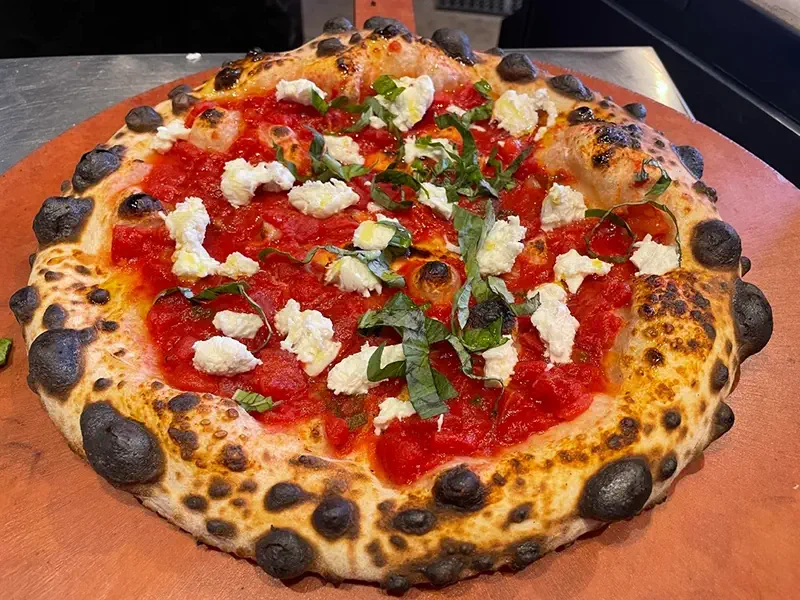
Note: This page discusses black “leoparding” spots, with the rest of the crust well-browned, as shown below. If experiencing aggressive burnt bubbles over a pale, under-browned crust, see: Medium-Large, Burnt/Charred Bubbles Form on an Otherwise Pale/Under-browned Crust.
This page is part of PizzaBlab’s Pizza Making Troubleshooting Guide. It provides a practical overview of the most common causes for this problem, each with a brief explanation, actionable solution, and links to related articles for deeper understanding.
The sections are listed from most to least likely, meaning the first cause typically represents the most common reason for this issue, with likelihood decreasing as you move down the list. That said, several causes can often overlap or share similar likelihoods – it’s ultimately up to your process to identify which factors are at play.
Cause 1: Air Pockets Were Trapped in the Crust’s Edges (Rim) During Stretching
Explanation:
Air pockets trapped in the crus’ts rim (cornicione) during stretching form thin bubbles that bake and burn faster (see “Additional Notes / Information” section).
Solution:
If noticeable air bubbles form in the crust while stretching, gently puncture them by pinching outward.
Cause 2: The Dough Was Over-Fermented When Baked
Explanation:
Over-fermented dough tends to be very “bubbly”, forming many bubbles that burn/char during baking.
Solution:
Avoid reaching over-fermentation (see: The Dough Ferments Too Quickly or Is Over-Fermented).
Read More:
- The Fermentation and Maturation Processes in Pizza Dough
- How to Tell if the Dough is Ready for Baking: 4 Dough Fermentation Tests
Cause 3: The Dough Was Too Cold When Baked
Explanation:
Dough that is baked too cold can form bubbles during baking because of uneven gas distribution (see “Additional Notes / Information” section).
Solution:
Allow the dough to reach an internal temperature of at least 15°C (60°F) before baking.
Additional Notes / Information
The reason these bubbles bake or burn faster than the rest of the crust is due to two main factors:
- Height above the surface: The bubbles rise above the dough’s surface, bringing them closer to the heat source and exposing them to stronger radiant heat, causing them to bake faster.
- Thin walls: The bubbles are naturally very thin, causing them to bake and burn more quickly.
Over-fermented dough tends to be very airy and bubbly due to excessive CO₂ production. In such cases, many bubbles form in the crust during stretching, and if they are not punctured before baking, they will burn.
Baking cold dough also contributes to aggressive black “leoparding.” CO₂ – the gas that fills the dough – is more soluble at lower temperatures. This means that in cold dough, CO₂ is less dispersed in a gaseous state and more “dissolved” in the dough’s water.
When cold dough is exposed to a very high baking temperature (such as that of a wood-fired oven), the solubility of CO₂ drops instantly, causing concentrated “gas pockets” to form. These pockets expand quickly in localized areas, resulting in large bubbles that char and create aggressive black spots all over the crust.
In contrast, dough that warms gradually allows CO₂ to disperse evenly, preventing localized gas pockets that form this aggressive leoparding.
← Back to PizzaBlab’s Troubleshooting Index

Enjoyed this article? Join the BLAB
Unlock the Key Takeaways above and enjoy a 100% clean, ad-free experience across the entire site.


![Why Your Pizza Dough Smells Like Beer or Alcohol, and How to Fix/Prevent It [Causes & Solutions]](https://www.pizzablab.com/wp-content/uploads/2025/11/pizza-making-troubleshooting-cover-768x561.webp)