
How to Fix Pizza Dough That Sticks to the Peel During Launching [Causes & Solutions]
“Pizza dough that sticks to the peel is the most frustrating way to ruin a pizza, resulting in a folded, messy launch that cannot be easily fixed. This is nearly always a result of insufficient dusting flour, overly sticky dough, or improper launching technique. This page details the exact causes and provides actionable solutions to eliminate sticking and launch your pizza perfectly every time
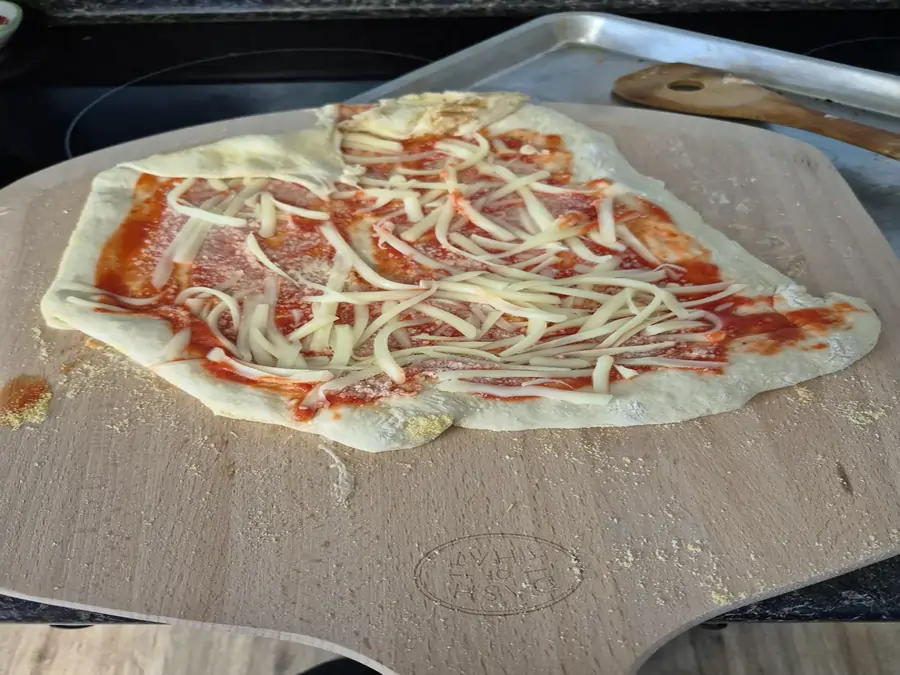
This page is part of PizzaBlab’s Pizza Making Troubleshooting Guide. It provides a practical overview of the most common causes for this problem, each with a brief explanation, actionable solution, and links to related articles for deeper understanding.
The sections are listed from most to least likely, meaning the first cause typically represents the most common reason for this issue, with likelihood decreasing as you move down the list. That said, several causes can often overlap or share similar likelihoods – it’s ultimately up to your process to identify which factors are at play.
Cause 1: Improper Pizza Launching Technique
Explanation:
Improper launching technique prevents the dough from transferring smoothly into the oven.
Solution:
PRACTICE. You can watch instructional videos on how to launch pizza into the oven, but experience is key.
Using parchment paper or a pizza screen can help make transferring the pizza easier.
Read More:
Cause 2: Improper Use of Bench/Dusting Flour
Explanation:
Dusting/bench flour prevents the dough from sticking to the peel. Using it incorrectly can cause the dough to stick.
Solution:
Learn to work correctly with dusting flour to prevent sticking (see article below).
Read More:
Cause 3: The Dough Is Over-Fermented
Explanation:
The dough has reached over-fermentation, becoming sticky and hard to handle.
Solution:
Avoid reaching over-fermentation (see: The Dough Ferments Too Quickly or Is Over-Fermented).
Read More:
- The Maturation Process in Pizza Dough (Breakdown of Protein/Gluten)
- How to Tell if the Dough is Ready for Baking: 4 Dough Fermentation Tests
Cause 4: Pizza Base Is Stretched Too Thin or Unevenly, or Has Tears
Explanation:
When the dough is stretched too thin or has tears, sauce can seep through, wetting the dough from below and causing it to stick to the peel.
Solution:
Stretch the pizza to a uniform thickness. If a tear occurs, pinch the dough inward around the tear to seal it (before adding sauce and toppings).
Cause 5: Using the Wrong Pizza Peel
Explanation:
Different peels are suited for different purposes – launching, turning, or removing pizza from the oven (see article below). For launching, a wooden peel is typically ideal.
Solution:
Use a wooden peel for launching, as it is better suited for transferring pizza into the oven.
Read More:
Cause 6: Dough Hydration Is Too High
Explanation:
Higher-hydration doughs are naturally stickier and more difficult to handle. The higher the hydration, the more challenging the dough becomes to work with.
Solution:
Use a lower hydration level.
Read More:
- What Is Hydration in Dough?
- How Hydration Affects Dough Behavior and Handling (Before Baking)
- List of Dough Hydration Levels for Various Pizza Types and Other Baked Products
Additional Notes / Information
One of the main reasons a pizza is difficult to transfer smoothly to the oven is over-fermented dough, that has become weak, slack, and sticky.
← Back to PizzaBlab’s Troubleshooting Index

Enjoyed this article? Join the BLAB
Unlock the Key Takeaways above, Get an ad-free experience on the entire site and direct, personal help with your dough or baking questions by becoming a member.


![Why Burnt Bubbles Form on a Pale or Undercooked Pizza Crust [Causes & Solutions]](https://www.pizzablab.com/wp-content/uploads/2024/03/pizza-crust-black-leoparding-768x571.webp)