How to Fix Over-Fermented (Overproofed) Pizza Dough [Causes & Solutions]
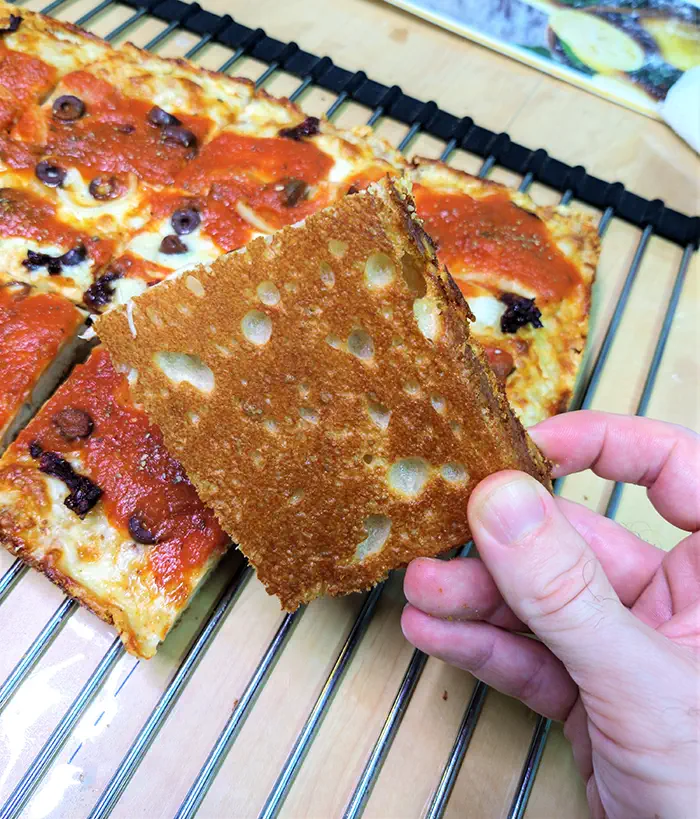
Over-fermented dough often results in a crust that is collapsed, sticky, highly acidic (vinegar-smelling), and difficult to handle or stretch. This problem is nearly always caused by a mismatch between yeast quantity and fermentation conditions, resulting in the dough being left too long or in too warm an environment. This page details the exact causes and provides actionable solutions to achieve perfect fermentation
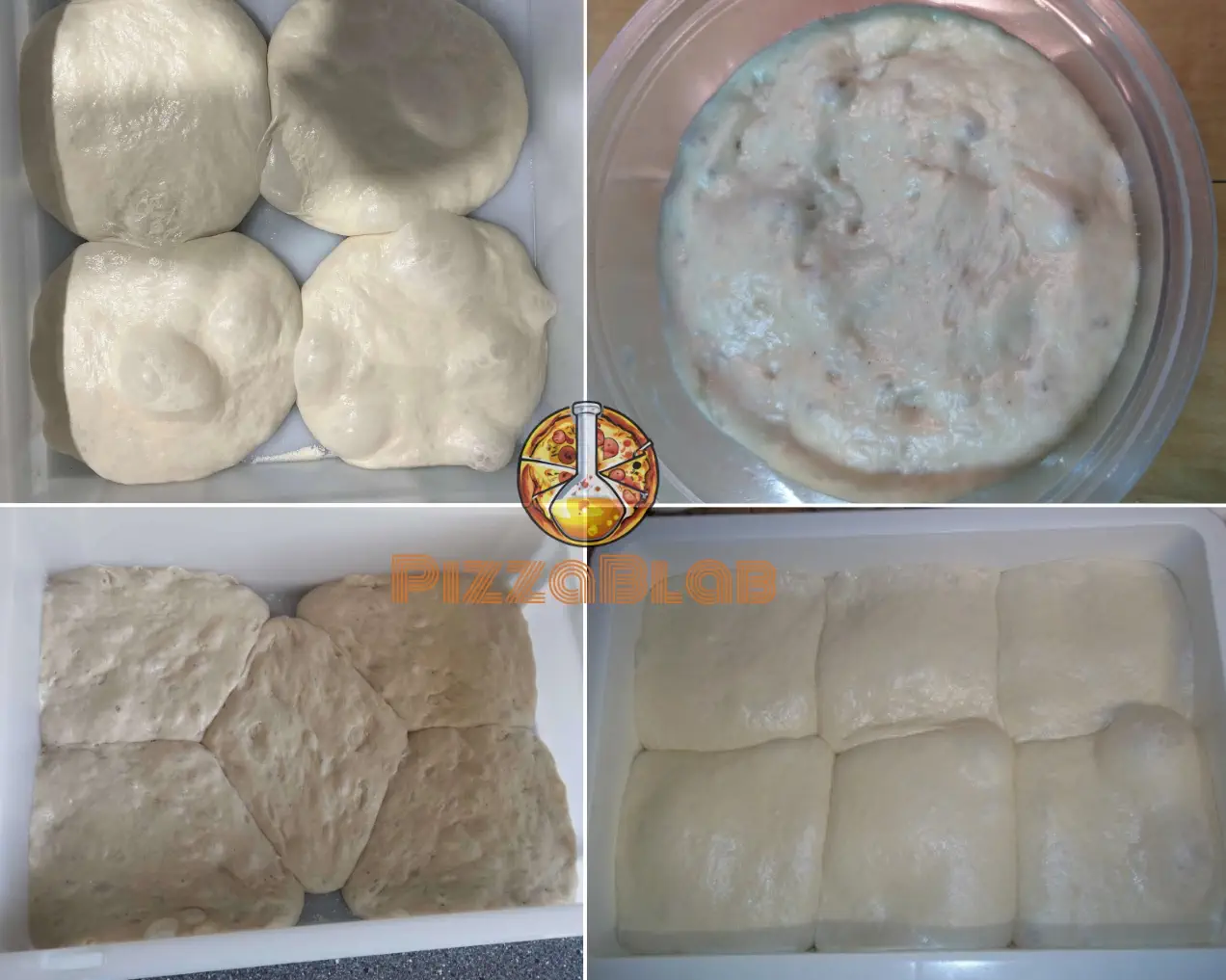
Note: For a thorough discussion on over- and under-fermented dough, see: Under and Over-Fermentation in Pizza Dough: Causes, Effects, and How to Avoid Them.
This page is part of PizzaBlab’s Pizza Making Troubleshooting Guide. It provides a practical overview of the most common causes for this problem, each with a brief explanation, actionable solution, and links to related articles for deeper understanding.
The sections are listed from most to least likely, meaning the first cause typically represents the most common reason for this issue, with likelihood decreasing as you move down the list. That said, several causes can often overlap or share similar likelihoods – it’s ultimately up to your process to identify which factors are at play.
Cause 1: Mismatch Between Yeast Quantity and Fermentation Conditions
Explanation:
The amount of yeast used did not match the fermentation conditions (time and temperature), causing the dough to ferment too quickly and be ready before intended (over-fermented). This can occur when:
- The fermentation time is too long for the yeast amount and temperature (needed to ferment the dough for a shorter time).
- The yeast amount is too high for the fermentation time and temperature (needed to use less yeast).
- The fermentation temperature is too high for the yeast amount and time (needed to ferment the dough at a lower temperature).
Solution:
Ensure the yeast amount aligns with the intended fermentation time and temperature. Use PizzaBlab’s dough calculator to determine the correct yeast amount for your fermentation conditions.
Read More:
Cause 2: Final Dough Temperature Too High
Explanation:
Final dough temperature (FDT) – the temperature of the dough at the end of kneading – has a major effect on fermentation speed. A higher FDT accelerates fermentation, while a lower FDT slows it down.
If the final dough temperature is too high, or higher than intended, the dough will ferment faster, potentially resulting in over-fermentation.
Solution:
Ensure the final dough temperature (at the end of kneading) is within 23–27°C (75–80°F).
Read More:
Cause 3: For Cold Fermentation: The Dough Was Bulk-Fermented in the Fridge, or Partially Fermented at Room Temperature Before Refrigeration (“Hybrid Fermentation”)
Explanation:
The larger the dough mass and the more “airy” it is (from prior fermentation), the longer it takes to cool in the fridge (depending on mass and dough condition, this can take 10 or more hours). As a result, the dough can ferment faster than intended in the fridge, potentially being ready or over-fermented before its intended use.
Solution:
When cold fermenting, divide the dough into balls and move it to the fridge immediately after kneading (known as the ‘Lehmann fermentation method’), especially when using PizzaBlab’s dough calculator for cold fermentation.
Read More:
- Bulk Fermentation in the Fridge
- Challenges and Potential Drawbacks of Hybrid Fermentation
- How to Cold Ferment Pizza Dough: A Practical Guide [2 Methods]
Cause 4: Flour Used Is Too Weak
Explanation:
Using a flour that is too weak (low in protein) for the given fermentation conditions (time and temperature) can lead to premature over-fermentation (the dough becomes over-fermented before the fermentation process is complete.)
This also applies to wholemeal flours and other wheat varieties (like spelt or rye), whether wholemeal or white. These wheats/flours lack sufficient gluten-forming proteins to build a strong, elastic dough suitable for pizza, and wholemeal flours contain bran and germ that interfere with gluten development. While some may have higher total protein content, their gluten quality is poor, resulting in a weaker dough that’s less ideal for pizza making (see articles below).
Solution:
Use stronger flour with higher protein content.
Read More:
- Gluten Quantity and Quality in Flour (“Strong” vs “Weak” Flour)
- Wholemeal, Ancient, and Other Grain Varieties as Pizza Flour
- The Impact of Protein Content of Flour on Dough and Crust Characteristics
Additional Notes / Information
Here is a list of useful articles related to fermentation:
- For guidance on determining whether your dough is over-fermented/proofed: How to Tell if the Dough is Ready for Baking: 4 Dough Fermentation Tests.
- To learn fermentation best practices:
- For cold fermentation: How to Cold Ferment Pizza Dough: A Practical Guide [2 Methods]
- For room temperature fermentation: How to Ferment Pizza Dough at Room Temperature: A Practical Guide
- For a thorough discussion on over- and under-fermented dough: Under and Over-Fermentation in Pizza Dough: Causes, Effects, and How to Avoid Them.
Note that reballing over-fermented dough is not a “fix” for over-fermentation. It may restore some elasticity and strength in the short term, but there is no way to fully reverse the effects of over-fermented dough.
Slowing Down Fermentation
If you notice that the dough is fermenting faster than desired, you can move it to a colder location to slow down fermentation. For example, transfer it to the fridge, or if it’s already there, place it in the coldest spot – typically the highest shelf, near the back, or close to the air vents.
Avoid using the freezer to halt over-fermentation. Freezing dough damages yeast cells and further weakens the dough, further compromising the structure of an over-fermented dough.
Moving the dough to a colder place does not have an immediate effect – as explained earlier, it can take hours for the dough to fully reach fridge temperatures. Still, this simple step can help slow fermentation somewhat.
← Back to PizzaBlab’s Troubleshooting Index
Enjoy the content on PizzaBlab? Help me keep the oven running!