
Why Your Pizza Crust Has Too Large Bubbles, Holes or “Spiderwebs” [Causes & Solutions]
While small-to-medium air pockets in the crumb are the sign of proper fermentation and baking, excessively large holes, voids, or ‘spiderwebs’ are typically symptoms of over-fermentation and/or weak gluten structure. This page breaks down the exact causes and provides actionable solutions for achieving a perfectly balanced, professional crumb structure
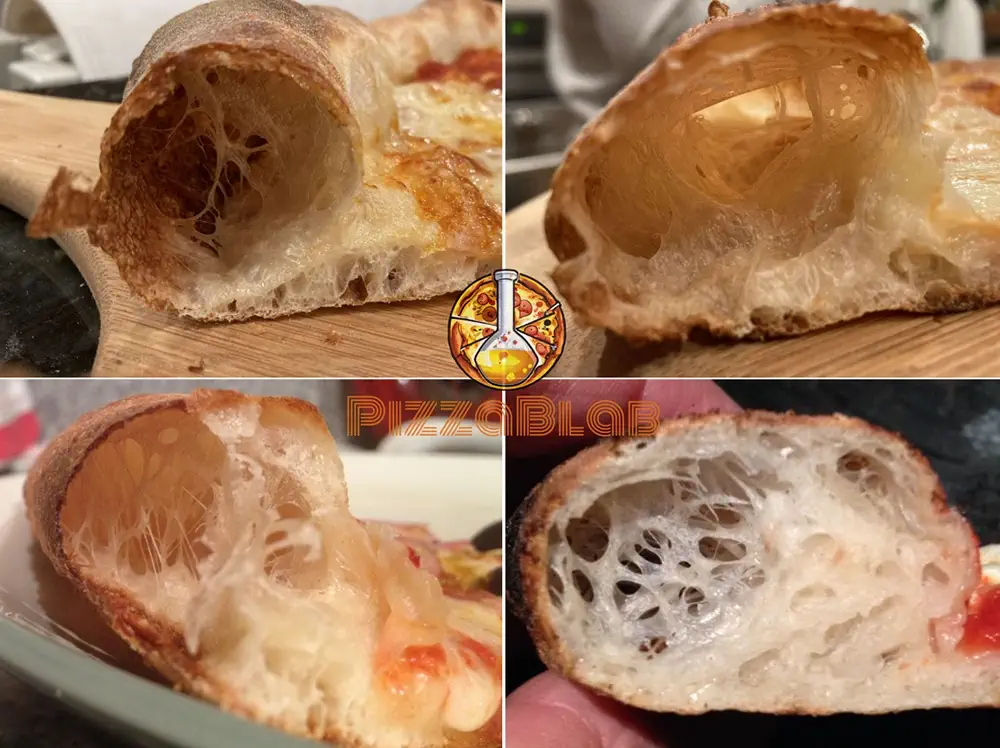
This page is part of PizzaBlab’s Pizza Making Troubleshooting Guide. It provides a practical overview of the most common causes for this problem, each with a brief explanation, actionable solution, and links to related articles for deeper understanding.
The sections are listed from most to least likely, meaning the first cause typically represents the most common reason for this issue, with likelihood decreasing as you move down the list. That said, several causes can often overlap or share similar likelihoods – it’s ultimately up to your process to identify which factors are at play.
Cause 1: The Dough Is Over-Fermented (Too Extensible and Lacks Elasticity)
Explanation:
The dough has reached over-fermentation, becoming too extensible and lacking elasticity, making it unable to support itself during baking. This results in an overly open crumb structure with large bubbles, hollow voids, or “spiderwebs.”
Solution:
Avoid reaching over-fermentation (see: The Dough Ferments Too Quickly or Is Over-Fermented).
Read More:
- The Maturation Process in Pizza Dough (Breakdown of Protein/Gluten)
- How to Tell if the Dough is Ready for Baking: 4 Dough Fermentation Tests
Cause 2: Dough Was Too Extensible When Baked (Not Over-Fermented)
Explanation:
Gluten that is too extensible when baked lacks strength and elasticity, making it unable to support itself during baking. This results in an overly open crumb structure with large bubbles, hollow voids, or “spiderwebs.”
Solution:
Aim for a more elastic, less extensible dough at the time of baking – for example, by reducing fermentation time in balls (see articles below).
Read More:
- Effects of Bulk and Ball Fermentation on Dough Behavior (Elasticity and Extensibility)
- Factors Affecting Dough Elasticity and Extensibility
Cause 3: Dough Hydration Is Too High
Explanation:
Higher-hydration doughs are naturally more extensible. The higher the dough hydration is, the more extensible the dough becomes, potentially resulting in these too-large bubbles.
Solution:
Use a lower hydration level.
Read More:
- What Is Hydration in Dough?
- The Effects of Hydration on Baking and the Final Product (Pizza or Bread)
Additional Notes / Information
“Spiderwebs”, too large bubbles or hollow voids in the crumb are NOT desirable – it signals a flaw in the dough’s condition when baked.
The gluten network was too weak, either due to over-fermentation or excessive extensibility, and could not support the structure. As a result, the dough gained volume, but its internal structure collapsed, leaving hollow spaces and a “spiderweb”-like pattern that reflects the remnants of the degraded gluten network.
This type of crumb generally has poor eating qualities and is unpleasant to eat. It usually consists of a hollow outer shell with little to no internal structure, resulting in a gummy texture similar to a thin, dry pita. If the “shell” has toughened, it can develop a brittle, overly crisp texture reminiscent of an eggshell or dry cracker.
← Back to PizzaBlab’s Troubleshooting Index

Enjoyed this article? Join the BLAB
Unlock the Key Takeaways above and enjoy a 100% clean, ad-free experience across the entire site.


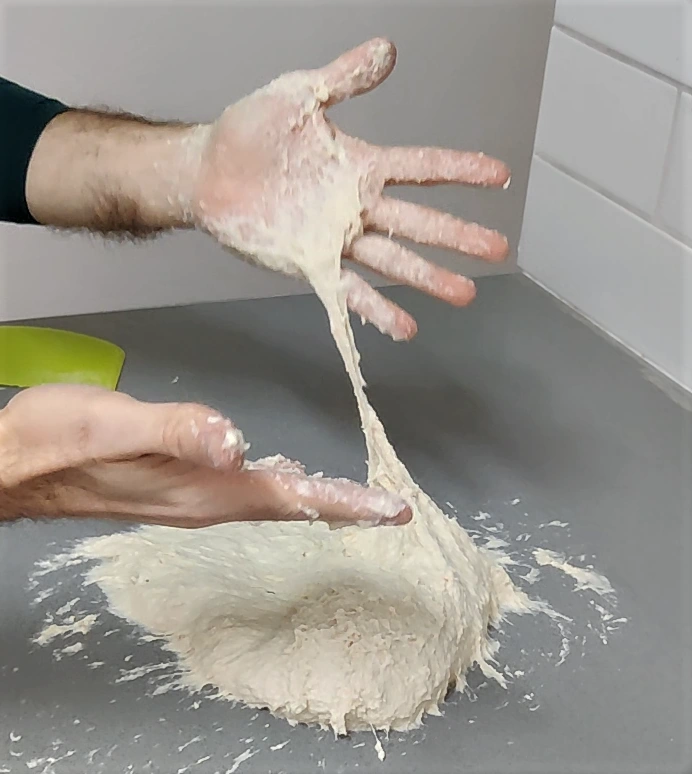


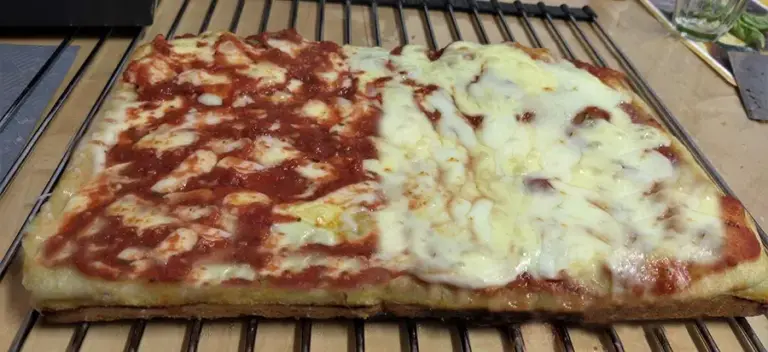
If the images shows a weak gluten structure what is it suppose to look like. There’s no follow up image.
Hi Ed,
The images on this page (and all other troubleshooting pages) are just for reference to demonstrate the specific problem or scenario being discussed. If you want to see what a “proper” gluten structure looks like, you can find plenty of examples over in my pizza gallery.