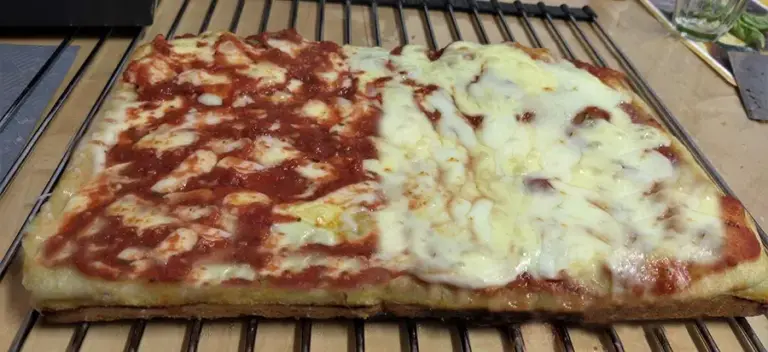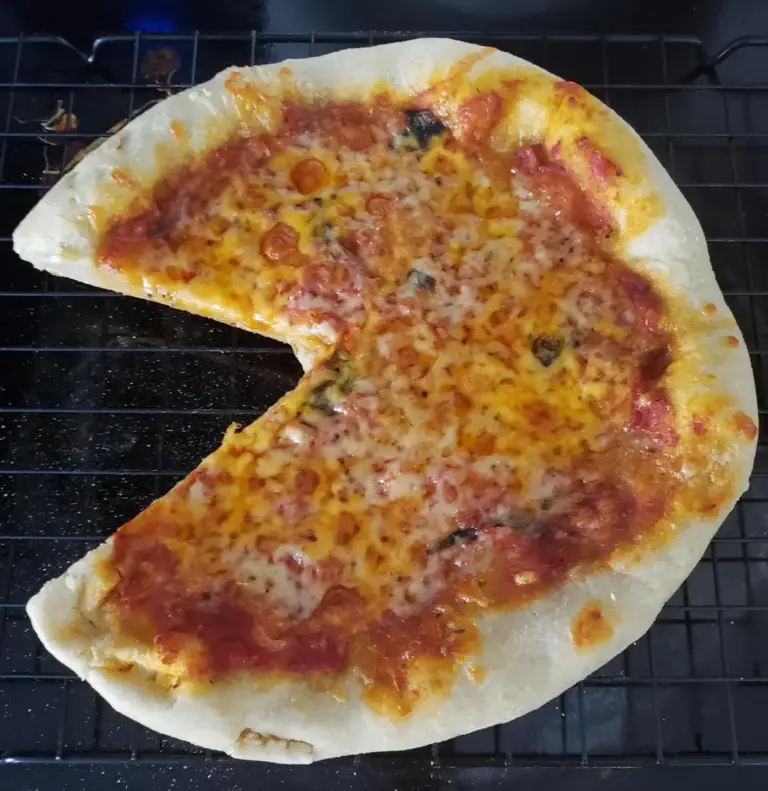
Why Your Pizza Slices are Too Floppy [Causes & Solutions]
While not inherently a problem (especially when making Neapolitan pizza), a pizza slice that is too floppy can be a major frustration for those seeking a crisp, sturdy base. This page details the exact causes and provides actionable solutions for achieving a crust that holds its shape and supports its own weight
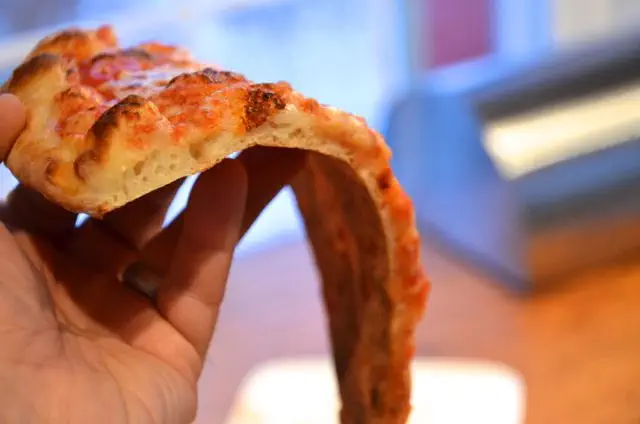
Note: This page is about non-Neapolitan pizzas. Neapolitan pizza *should* be completely soft, floppy and lacking crispiness.
This page is part of PizzaBlab’s Pizza Making Troubleshooting Guide. It provides a practical overview of the most common causes for this problem, each with a brief explanation, actionable solution, and links to related articles for deeper understanding.
The sections are listed from most to least likely, meaning the first cause typically represents the most common reason for this issue, with likelihood decreasing as you move down the list. That said, several causes can often overlap or share similar likelihoods – it’s ultimately up to your process to identify which factors are at play.
Cause 1: The Pizza Has Too Much Cheese or Toppings
Explanation:
Placing too much sauce, cheese, or toppings on the pizza weighs it down, causing slices to flop and not hold their shape.
Solution:
Reduce the amount of cheese and toppings to achieve better structural support.
Read More:
Cause 2: The Dough Was Stretched Too Thin (When Not Making a Cracker-Style Pizza)
Explanation:
Dough that is stretched too thin lacks the structure to support the toppings, resulting in floppy slices.
Solution:
Use more dough for the same pizza size to create a thicker base (you can calculate this using the thickness factor setting in PizzaBlab’s dough calculator – see article below).
Read More:
Cause 3: The Pizza Base Has Not Firmed/Crisped Enough During Baking
Explanation:
A pizza bottom that has not sufficiently firmed or crisped will be less capable of holding its shape.
Solution:
Bake the pizza so that the base is firmer. This can be achieved by using a more conductive baking surface, baking longer, and/or baking at a higher temperature.
Read More:
- How the Baking Surface Properties Affect Baking and Performance
- The Complete Guide to Crispy Pizza: All the Ways to Create a Crispier Crust
Cause 4: Baked Pizza Placed on a Surface That Does Not Allow Steam to Disperse After Baking
Explanation:
If the pizza is not allowed to release steam after being removed from the oven, moisture accumulates under the bottom, resulting in sogginess, floppiness, and loss of firmness and crispiness.
Solution:
Place the pizza on a cooling rack – a raised, non-sealed surface – for at least 1–2 minutes after baking, to allow steam to escape from the bottom.
Read More:
Cause 5: Dough Not Allowed to Cool Enough After Baking
Explanation:
Steaming-hot dough is at its softest, and firms as it cools. As the crust cools, it becomes firmer and less floppy.
Solution:
Allow the pizza to cool slightly before lifting or slicing (a steaming-hot slice is difficult to handle and eat anyways).
Read More:
Additional Notes / Information
Slices being floppy is not necessarily a “problem,” but some people prefer a firmer and sturdier slice with no flop (ahem, Dave Portnoy).
Note that there is no direct relation between dough hydration and the softness or firmness of the crust. Simply increasing hydration will not solve the problem described in this page.
For a deeper understanding, see:
- The Effect of Hydration on Crumb Moisture Content After Baking
- The Effect of Hydration on the Eating Characteristics of Baked Goods (Moistness, Softness, Airiness, and Tenderness)
← Back to PizzaBlab’s Troubleshooting Index

Enjoyed this article? Join the BLAB
Unlock the Key Takeaways above and enjoy a 100% clean, ad-free experience across the entire site.