
How to Fix Under-Fermented (Underproofed) Pizza Dough [Causes & Solutions]
Under-fermented dough results in a pizza crust that is often dense, flat, pale, and lacks the complex flavor of a properly proofed dough. This problem is nearly always caused by a mismatch between yeast quantity and fermentation conditions. This page details the exact causes and provides actionable solutions to achieve perfect fermentation
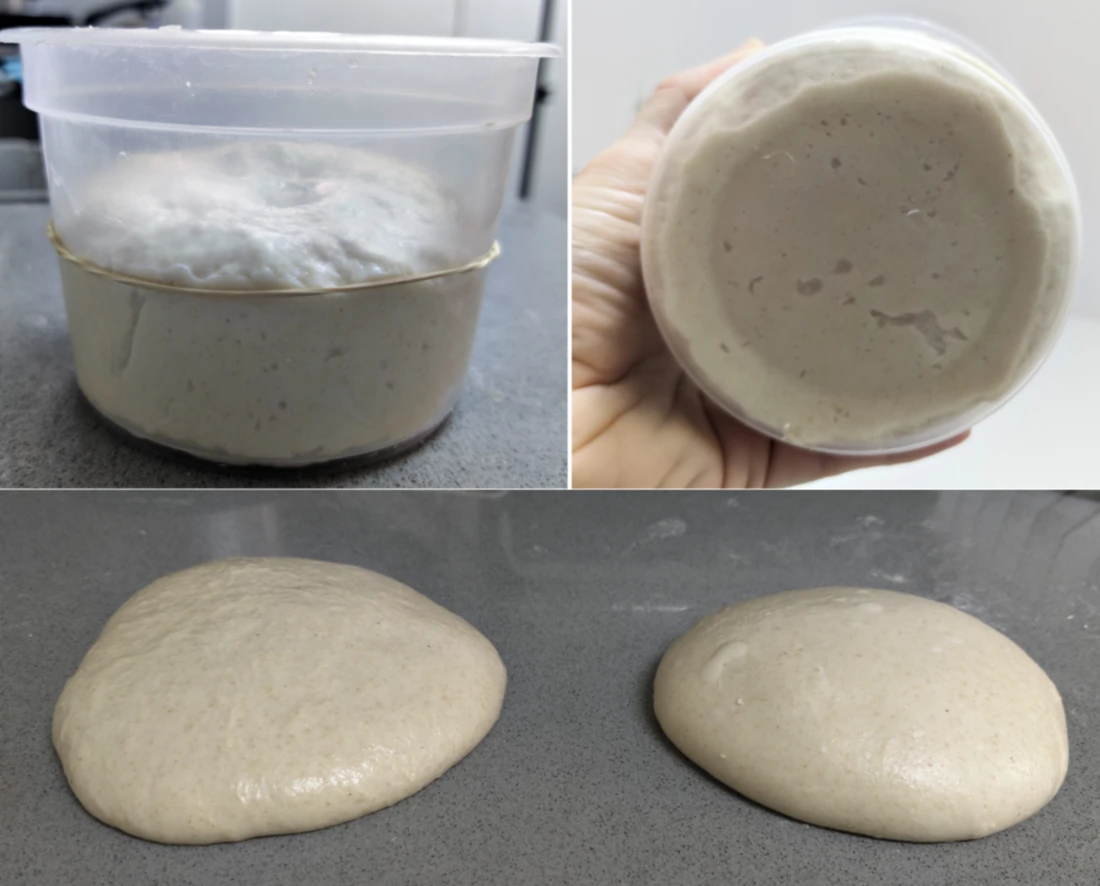
Note: For a thorough discussion on over- and under-fermented dough, see: Under and Over-Fermentation in Pizza Dough: Causes, Effects, and How to Avoid Them.
This page is part of PizzaBlab’s Pizza Making Troubleshooting Guide. It provides a practical overview of the most common causes for this problem, each with a brief explanation, actionable solution, and links to related articles for deeper understanding.
The sections are listed from most to least likely, meaning the first cause typically represents the most common reason for this issue, with likelihood decreasing as you move down the list. That said, several causes can often overlap or share similar likelihoods – it’s ultimately up to your process to identify which factors are at play.
Cause 1: Mismatch Between Yeast Quantity and Fermentation Conditions
Explanation:
The amount of yeast used did not match the fermentation conditions (time and temperature), resulting in a dough that ferments too slowly and isn’t ready when intended (under-fermented). This can occur when:
- The fermentation time is too short for the yeast amount and temperature (needed to ferment the dough for a longer time).
- The yeast amount is too small for the fermentation time and temperature (needed to use more yeast).
- The fermentation temperature is too low for the yeast amount and time (needed to ferment the dough at a higher temperature).
Solution:
Ensure the yeast amount aligns with the intended fermentation time and temperature. Use PizzaBlab’s dough calculator to determine the correct yeast amount for your fermentation conditions.
Read More:
Cause 2: Final Dough Temperature Too Low
Explanation:
Final dough temperature (FDT) – the temperature of the dough at the end of kneading – has a major effect on fermentation speed. A higher FDT accelerates fermentation, while a lower FDT slows it down.
If the final dough temperature is too low, or lower than intended, the dough will ferment more slowly, potentially resulting in an under-fermented dough.
Solution:
Ensure the final dough temperature (at the end of kneading) is within 23–27°C (75–80°F).
Read More:
Cause 3: Dry Yeast Added Directly to Cold Water
Explanation:
Adding dry yeast directly to cold water (below 20°C/68°F) can damage yeast cells and may kill some of them, resulting in slower fermentation than intended.
Solution:
If using cold water (especially ice water), dissolve the yeast in warm water before adding it to the rest of the water. Alternatively, mix the yeast with the flour before combining it with water.
Read More:
Cause 4: Yeast Is Dead or Has Lost Its Potency
Explanation:
The yeast used is old or has lost its potency, resulting in slow or stalled fermentation. This is especially common with fresh yeast, which has a very short shelf life.
Solution:
Ensure the yeast is active before use.
Read More:
Additional Notes / Information
Here is a list of useful articles related to fermentation:
- For guidance on determining whether your dough is over-fermented/proofed: How to Tell if the Dough is Ready for Baking: 4 Dough Fermentation Tests.
- To learn fermentation best practices:
- For cold fermentation: How to Cold Ferment Pizza Dough: A Practical Guide [2 Methods]
- For room temperature fermentation: How to Ferment Pizza Dough at Room Temperature: A Practical Guide
- For a thorough discussion on over- and under-fermented dough: Under and Over-Fermentation in Pizza Dough: Causes, Effects, and How to Avoid Them.
Speeding Up Fermentation
If you notice that the dough is fermenting slower than expected, you can move it to a warmer location. For example, transfer it to a warmer room, or place it in an oven with the light on.
← Back to PizzaBlab’s Troubleshooting Index
Enjoy the content on PizzaBlab? Help me keep the oven running!

![Why Your Pizza Crust is Bland or Lacks Flavor [Causes & Solutions]](https://www.pizzablab.com/wp-content/uploads/2025/11/pizza-making-troubleshooting-cover-768x561.webp)

![Why Burnt Bubbles Form on a Pale or Undercooked Pizza Crust [Causes & Solutions]](https://www.pizzablab.com/wp-content/uploads/2024/03/pizza-crust-black-leoparding-768x571.webp)

