How to Properly Use Yeast in Pizza Dough (Dry and Fresh)
Using yeast properly is key to achieving consistent fermentation and high-quality dough. While the process appears simple, variables like water temperature and application method directly impact how the yeast performs and how the dough handles. This article outlines the theoretical and practical foundations of using yeast, explaining the science of yeast cell rehydration, the proper methods for adding yeast to your dough, and how to avoid common mistakes that lead to weak dough and inconsistent fermentation results
Introduction: The Science of Cell Rehydration and Glutathione Release in Dry Yeast
Before discussing the proper use of dry yeast (both active and instant), it’s important to first understand the concept of cell rehydration in dry yeast – a process that directly impacts yeast activity, fermentation, and the overall properties of the dough.
The Science of Rehydration: Preventing Glutathione Leakage
During the drying process, dry yeast’s cell membrane becomes more porous, allowing substances to pass in and out more easily. When rehydrated with water, the membrane absorbs moisture and returns to its original state, but it is not fully functional at this stage. As a result, some essential components leak into the dough:
- Cofactors: Necessary for enzyme activity in yeast cells.
- Glutathione: An antioxidant important for yeast cells that also affects dough properties when it leaks into the dough.
The optimal temperature for rehydration and membrane recovery is 40°C/104°F.
All the information provided above and in this section applies only to dry yeast (both active and instant), as fresh yeast does not undergo a rehydration process. For an official reference on the topics discussed here, see this information sheet from Lallemand, a global leader in yeast production.
While cofactors are crucial for yeast activity, yeast cells can resynthesize them, so their impact is mainly significant at the start of fermentation, though the amount released can still have a noticeable effect. The issue with glutathione, however, is different.
When glutathione is released into the dough, it acts as a dough softener/reducer by breaking down gluten bonds (specifically disulfide bonds), essentially weakening the dough and making it more “slack.” Excessive release of glutathione can make the dough too extensible, soft, and sticky, which can make it difficult to handle, and also affect the final product.
Certain dough enhancers (dough reducers) include glutathione (in the form of “dead” or “deactivated” yeast) in controlled amounts. These dough enhancers are used to soften the dough, making it more extensible and easier to work with.
When using instant dry yeast, glutathione release is inevitable, even under optimal conditions. However, minimizing this release is highly desirable. This can be achieved by providing the yeast with optimal rehydration conditions, specifically by suspending it in warm water.
Suspending dry yeast in water at temperatures between 37-43°C/98-110°F ensures ideal cell membrane recovery, reducing the release of glutathione and cofactors into the dough.
If the yeast comes into contact with water outside this optimal range, different effects occur:
- At temperatures between 21-37°C/70-98°F, the release of glutathione and cofactors is less significant, but still present.
- If the water temperature is below 20°C/68°F, membrane recovery slows down significantly, leading to increased release of essential components from the yeast cells. In this scenario, up to half of the cell’s soluble components may be lost. The lower the temperature and the longer the yeast is exposed to it, the greater the effect.
Why You Must Avoid Adding Dry Yeast to Cold Water
If yeast comes into direct contact with cold water, a significant number of yeast cells may be killed/damaged, depending on the temperature and duration of exposure. This can slow down fermentation and alter the dough’s properties, leading to increased glutathione release and a more extensible, sticky, and “wet” dough. If your dough hasn’t risen after adding yeast directly to cold water, this is likely the cause.
While less common, it is also important to avoid adding yeast directly to hot water (over 46°C/115°F).
Therefore, when working with dry yeast, it is crucial to avoid direct contact with cold water. This is especially true for instant dry yeast, as its manufacturing process makes it more “sensitive” during the rehydration process.
All major yeast manufacturers explicitly advise against adding dry yeast (whether instant or active) to cold water (an example from Lessafre – see the ‘usage’ section), and recommend using the yeast in one of the methods outlined in the next sections.
In summary, for optimal results, both instant and active dry yeast should not be added directly to cold water (below 20°C / 68°F). Doing so can result in a slack, sticky, overly extensible dough, and impair the yeast’s ability to properly ferment the dough.
The Four Methods for Adding Dry Yeast to Your Dough
Below are four effective methods for using dry yeast (and also what to avoid):
- Mixing the yeast with flour [simplest, most practical method].
- Adding the yeast mid-mixing (only applicable when using a mixer).
- Adding the yeast directly to water at a temperature higher than 21°C/70°F (not ideal, but works).
- Suspending the yeast in warm water and then adding it to the rest of the recipe’s water [recommended method].
These methods mainly apply to instant dry yeast (IDY). Active dry yeast (ADY) must be suspended in warm water, as described in method #4 below.
1. Mixing Yeast with Flour (The “Buffer” Method)
This is probably the simplest method for using instant dry yeast, and it’s usually the one most yeast producers recommend. By mixing the yeast with the flour (or sprinkling it over the flour), we create a ‘buffer’ that prevents direct contact between the yeast and the water.
To use this method, thoroughly mix the yeast with the flour before adding it to the water (even if the water is cold).
Alternatively, you can sprinkle the yeast on top of the flour after adding the flour to the bowl (i.e.: add water to the bowl → add flour to the water → sprinkle yeast on top).
If using ice water, it is recommended to mix the yeast with the flour and let the yeast-flour mixture sit for at least 10 minutes. This allows the yeast to absorb some moisture from the flour (flour contains about 14% moisture), starting the rehydration process and improving the yeast’s “durability” when it eventually contacts the cold water.
2. Delayed Addition (Mid-Mixing)
This method is not the most convenient, but it is effective. Begin by mixing all the dough ingredients except the yeast. After 2-3 minutes, when most of the water has been absorbed by the flour, sprinkle the yeast over the dough and continue mixing. This method is best used with a mixer, as kneading by hand would make it challenging to evenly incorporate the yeast into the dough.
By adding the yeast only after all the water has been absorbed by the flour, you prevent it from coming into direct contact with cold water. At the end of mixing, ensure there are no remaining “free” yeast granules that haven’t been fully incorporated into the dough.
3. Direct Addition to Water (Above 21°C/70°F)
This method is not ideal because some glutathione will still be released into the dough; However, it can be effective, especially in warmer weather when tap water temperatures are higher, or when achieving a more extensible dough is desired. Simply sprinkle the yeast into the water, mix well, and then add the remaining dough ingredients.
4. The Recommended Method: Suspending Yeast in Warm Water
This is the most effective method for using any type of dry yeast, as it ensures optimal rehydration of the yeast cells – and it’s the one I personally recommend.
To use this method, suspend the yeast in warm water at 37–43°C (98–110°F), and let it sit for about 10 minutes.
The yeast should be mixed with water only, without any added sugar, flour, or other ingredients. Once rehydrated, add the yeast-water mixture to the rest of the recipe water, even if the remaining water is cold.
This method is especially recommended when hand-kneading, as it helps distribute the yeast evenly throughout the dough.
In the next section, you’ll find detailed instructions on how to properly rehydrate yeast in warm water.
How to Properly Suspend Dry Yeast in Warm Water
Suspend the yeast in a separate container, using a small amount of warm water. You can either heat the water in the microwave or mix hot water with cold water until it reaches a temperature of 37-43°C/98-110°F – whichever method you find more convenient.
To measure the water temperature, use an infrared thermometer or a probe thermometer. Alternatively, test the water with your finger; it should feel warm, but not too hot. If you can’t keep your finger in the water for more than 5 seconds, the water is too hot.
Be sure to account for the water used to suspend the yeast as part of the total amount of water in the recipe. For example, if the recipe calls for 100 grams of water and you used 20 grams to suspend the yeast, add the yeast water (20 grams) to 80 grams of water to reach a total of 100 grams. Be aware not to add the yeast water to an additional 100 grams of water, as this would result in a total of 120 grams of water.
My recommendation is to prepare the total amount of water required by the recipe in advance; Next, transfer a portion of this prepared water to a separate container to suspend the yeast. This way, you can safely add the yeast-water mixture to the remaining water and avoid confusion.
After heating the water, add the yeast (without any sugar or flour), mix well, and let the solution sit for about 10 minutes. Then, add the yeast water to the rest of the recipe’s water and mix well.
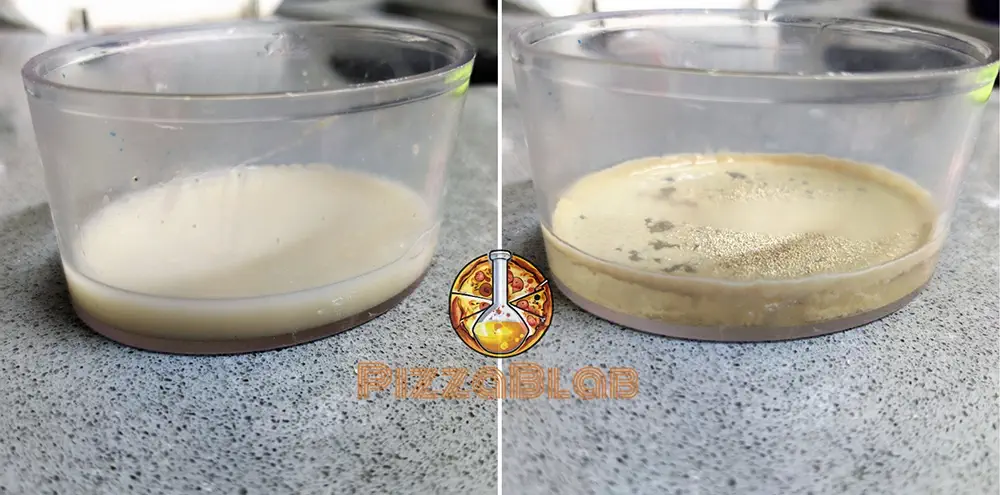
On the Left: The yeast after mixing and suspending for 10 minutes
Using Fresh Yeast
Fresh yeast is the easiest type of yeast to use. You can simply crumble it over the flour, or dissolve it in the recipe’s water – no need for rehydration or any special steps (other than making sure it’s still active).
Fresh yeast, unlike dry yeast, can be added directly to cold/ice water, as it does not undergo a rehydration process.
When hand kneading, it is recommended to crumble fresh yeast into the recipe’s water, and mix well until it is mostly dissolved. This ensures that the yeast is evenly distributed throughout the dough.
This is less of an issue when using a mixer, as a mixer incorporates the yeast into the dough much more efficiently than hand kneading.
Additional Practical Tips for Using Yeast
Can You Mix Salt and Yeast Together?
The short answer is yes, there is no problem adding yeast directly with salt.
In more detail, while salt has the potential to draw moisture from yeast cells and impair their functionality, this would require a very high salt concentration and a long exposure time – conditions not typically present when making dough.
To explore this further, a study was conducted to assess the effect of salt on yeast activity and fermentation. The study involved suspending yeast in a saltwater solution with a concentration of 7% for 20 and 40 minutes before incorporating it into the remaining dough ingredients. The aim was to evaluate the impact on fermentation and the final product, including volume, taste, and overall quality.
Surprisingly, the study found that dough in which yeast had been suspended for 40 minutes in the saltwater solution had the largest volume and ranked highest in taste, aroma, and overall quality. The study concluded that the “stress” induced by the salt did not harm the yeast, but actually enhanced its functionality, resulting in improved bread quality.
Of course, this does not mean that it is advisable or recommended to suspend yeast in saltwater before adding it to the dough, and the results of the study can be further interpreted and analyzed. However, this study proves, at the very least, that yeast does not die or sustain significant damage in the presence of salt.
Therefore, as long as salt and yeast are not left together for an extended period, adding salt directly with yeast should not be an issue.
Determining the Correct Yeast Quantity
A detailed answer to this question can be found in the following article: How Much Yeast to Use in Pizza Dough: Factors Affecting Fermentation Rate.
Until you have a chance to read the full article, know that PizzaBlab’s Dough Calculator allows you to calculate the amount of yeast needed based on fermentation duration and temperature – two key factors that affect yeast requirements – to achieve perfectly fermented dough and avoid both under and over-fermentation.
The calculator works for all types of yeast and yeast-leavened dough, not just pizza dough. For enriched or sweet doughs with a high sugar content (over 5% of the flour weight in baker’s percentages), it is recommended to increase the yeast amount provided by the calculator by 1.5. This adjustment accounts for the osmotic pressure caused by the high sugar content.
How to Test if Your Yeast is Still Active
To ensure your yeast is still viable, perform this simple test:
- Fill a glass with warm water. Test the temperature by dipping your finger in; it should feel warm but not too hot.
- Add a teaspoon of sugar to the glass and stir until most of the sugar dissolves.
- Add about half a teaspoon of yeast (dry or fresh) to the glass and mix until it dissolves.
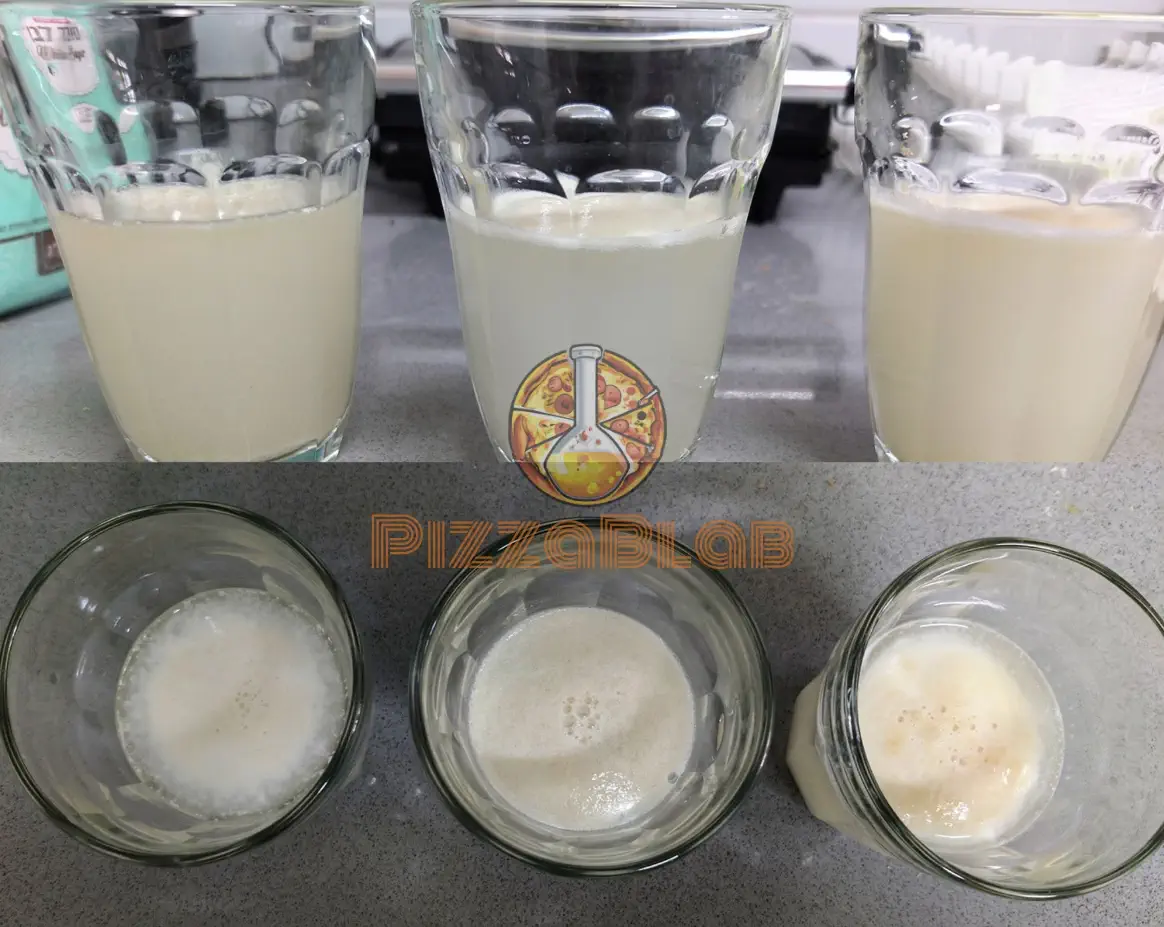
- Wait for approximately 15-30 minutes. A layer of foam or bubbles should form on the surface (see picture below). If foam or bubbles appear, your yeast is still good and can be used. If no significant foam forms, it’s time to purchase a new package of yeast.
Proper Storage for Fresh and Dry Yeast
Storing Fresh Yeast
Due to its high moisture content, fresh yeast has a very short shelf life. It typically lasts about two weeks at room temperature (approximately 23°C/73°F) and up to two months when refrigerated (0-5°C/32-40°F), from the date of production.
Fresh yeast loses its potency quickly. Even under optimal storage conditions in an unopened package, it can lose around 10% of its leavening power within the first month. Afterward, its potency decreases significantly each week, and it generally loses its leavening power completely after about two months.
Therefore, it is recommended to keep fresh yeast in the refrigerator, well-packed in its original packaging, and use it within two months of the production date (not the purchase date). As time passes, the leavening power of fresh yeast gradually decreases, so using the same amount of yeast after four weeks may not yield the same fermentation results as in the first week.
Avoid storing fresh yeast in the freezer, as the freezing process damages the yeast cells. The high moisture content causes ice crystals to form, which physically harms the cells and reduces their viability.
Storing Dry Yeast (Instant/Active)
Dry yeast has a very long shelf life. According to manufacturer guidelines, instant dry yeast can last up to two years, while active dry yeast can last up to one year. However, with proper storage, dry yeast can maintain its leavening power for even longer than two years, with minimal loss of leavening power.
For unopened packages, dry yeast can be stored at room temperature, ideally not exceeding 27°C/80°F. Once opened, it’s best to store the yeast in a completely sealed container to minimize exposure to air and moisture, which can degrade its potency.
The best places to store dry yeast are in the fridge (especially in colder areas like the back or inside) or in the freezer, which is recommended for optimal shelf life.
It is important not to keep dry yeast at room temperature after it has been opened, as this can significantly shorten its shelf life and potency.
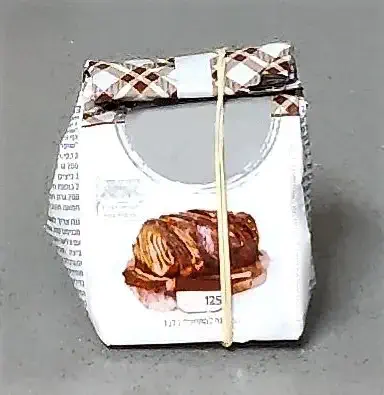
One efficient method for storing dry yeast is to keep it in its original packaging, which is typically made of aluminum. After opening, roll and fold down the top of the packaging until it touches the yeast to minimize the air inside, effectively resealing it (see picture below). Alternatively, transferring the yeast to another airtight container also works well.
Moisture is the main factor that affects the shelf life of dry yeast. It is crucial to avoid introducing any moisture or “wetting” the inside of the container or package where the yeast is stored.
Specifically, it’s important to avoid drastic temperature changes inside the container or package. For example, when a cold container is taken out of the fridge or freezer and exposed to room temperature, condensation can form inside. This occurs when warm air meets the inside of the cold container, resulting in water droplets that the yeast can absorb, shortening its shelf life.
To avoid this, you can use one of the following methods:
- Remove the container or package of yeast from the freezer or refrigerator, take out the required amount, reseal it, and immediately return it to the cold storage. This minimizes the risk of condensation inside the container, and is the recommended method.
- Alternatively, allow the container to reach room temperature before opening it. This way, you balance the temperatures, preventing condensation from forming inside.
By following these methods, you can easily extend the shelf life of your dry yeast to at least one year, and in practice much longer. Personally, I have a package of instant dry yeast that is three years old and still very much active.
Key Takeaways
- Dry Yeast Rehydration:
Dry yeast is made by removing water from yeast cells, which puts them into a dormant state but also damages their cell membranes. Once the yeast comes into contact with water in the dough, it takes a few minutes for the cells to reabsorb moisture and return to an active state. During this critical rehydration window, some internal components can leak out of the cell to the dough. The ideal temperature for the cell membrane to recover with minimal leakage is around 40°C (104°F). - The Glutathione ‘Danger’:
If dry yeast is added directly to cold water (below 20°C/68°F), the cell membranes cannot repair themselves properly and they leak glutathione into the dough. Glutathione acts as a dough “reducer” or softener that breaks down gluten bonds. This results in a dough that is excessively sticky, slack, and structurally weaker. - Never Add Dry Yeast to Cold Water:
To avoid glutathione leakage and ensure optimal yeast activity, never add dry yeast directly to cold/ice water. Always ensure the yeast is either “protected” by flour or rehydrated in warmer water first. - Four Methods for Using Dry Yeast:
- Mixing with Flour: The “buffer” method that protects the yeast from cold water.
- Delayed Addition: Adding yeast a few minutes into the mixing process.
- Directly into Water (Above 20°C): Safe for the yeast cells if the water isn’t cold.
- Dissolving in Warm Water (Recommended): Suspending the yeast in 35–40°C (95–105°F) water for 10 minutes is the most reliable way to ensure full activity, minimal gluthatione leakage and even distribution.
- Using Fresh Yeast:
Fresh yeast is the “easiest” to use because it hasn’t been dried and doesn’t need rehydration. It can be crumbled directly into flour or dissolved into water of any temperature (up to 50°C/120°F), even ice water, without any risk of damaging the cells. - The Salt and Yeast Myth:
Salt and yeast can be added at the same time. While high concentrations of salt can inhibit yeast, the levels used in pizza dough aren’t high enough to cause harm during the mixing stage. - Testing for Vitality:
If you suspect your yeast is dead, mix a small amount with warm water and a pinch of sugar. If it doesn’t foam or bubble within 10–15 minutes, the yeast is inactive and should be discarded. - Storage Best Practices:
Fresh yeast is highly perishable and only lasts a few weeks in the fridge (NOT in the freezer). Dry yeast is much more stable and can last for months to years, but should be kept in airtight containers in the fridge or freezer to maintain potency. - Fresh vs. Dry Yeast:
This article is a practical guide on the best practices for using yeast. For a deeper look at yeast types and their specific characteristics, see What’s the Best Yeast for Pizza? A Complete Guide to Baker’s Yeast: Fresh vs Dry.

Enjoyed this article? Join the BLAB
Unlock the Key Takeaways above and enjoy a 100% clean, ad-free experience across the entire site.