
How to Fix Pizza Dough That Flattened During Fermentation [Causes & Solutions]
Dough flattening during fermentation – where the dough ball loses its shape and spreads too much sideways – is expected to an extent, but when happening excessively, it can impact handling, stretching, and the final product. This issue is usually caused by a weak gluten structure (often due to over-fermentation), wrong container placement, or an overly extensible dough. This page details the exact causes and provides actionable solutions to keep your dough from spreading too much sideways instead of upwards
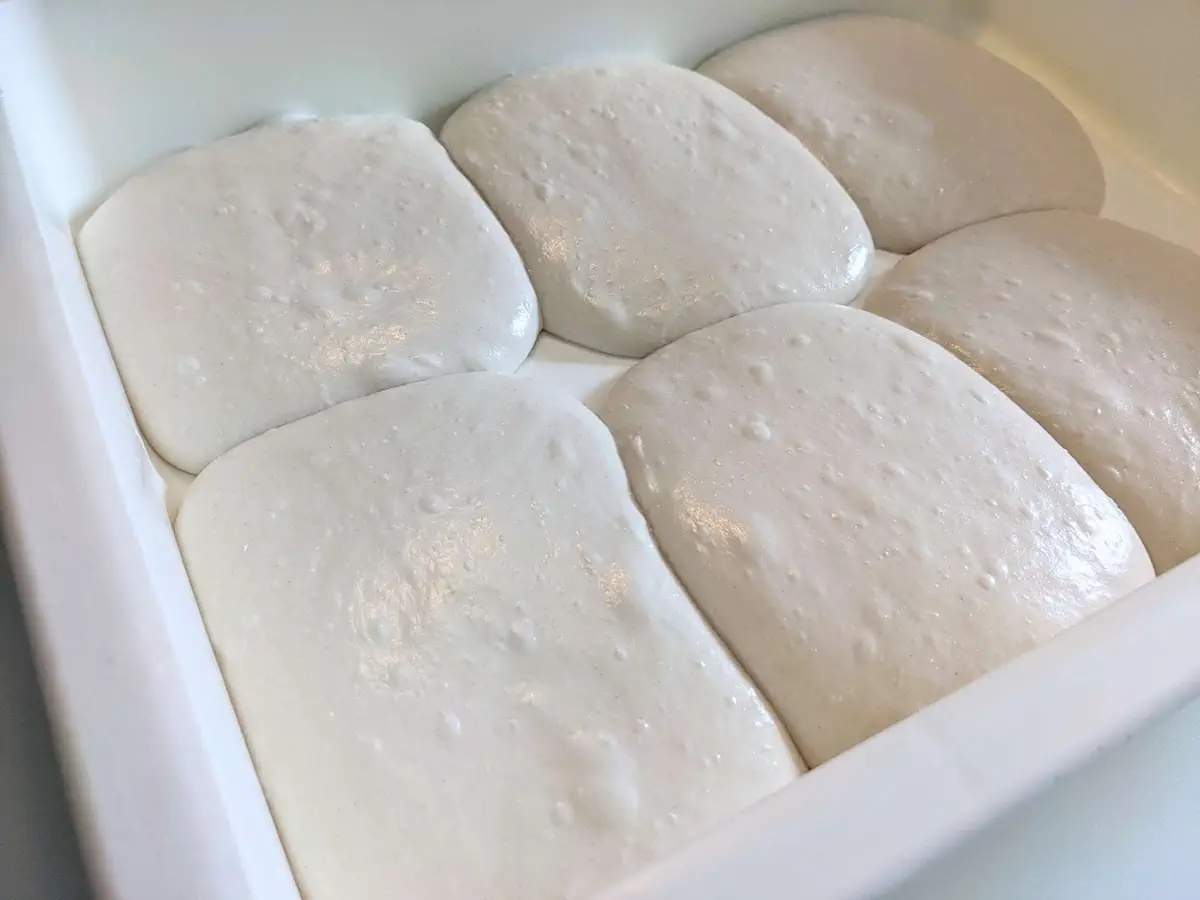
Note: This page refers to flattening dough balls that still maintain their defined shape and does not merge together. For dough balls that completely flatten or merge in the container, see: Pizza Dough Balls “Merge” in the Fermentation Container.
This page is part of PizzaBlab’s Pizza Making Troubleshooting Guide. It provides a practical overview of the most common causes for this problem, each with a brief explanation, actionable solution, and links to related articles for deeper understanding.
The sections are listed from most to least likely, meaning the first cause typically represents the most common reason for this issue, with likelihood decreasing as you move down the list. That said, several causes can often overlap or share similar likelihoods – it’s ultimately up to your process to identify which factors are at play.
Cause 1: The Dough Is Over-Fermented
Explanation:
The dough has reached over-fermentation, losing its structure and spreading out to the sides.
Solution:
Avoid reaching over-fermentation (see: The Dough Ferments Too Quickly or Is Over-Fermented).
Read More:
- The Maturation Process in Pizza Dough (Breakdown of Protein/Gluten)
- How to Tell if the Dough is Ready for Baking: 4 Dough Fermentation Tests
Cause 2: Too Much Fermentation Time in Balls (Dough Became Too Extensible)
Explanation:
The longer the dough ferments in ball form, the more extensible it becomes, spreading to the sides.
Solution:
Reduce fermentation time in balls and allow the dough to ferment longer in bulk.
Read More:
- Dough Elasticity and Extensibility: Understanding the Two Most Important Properties in Pizza Dough
- Effects of Bulk and Ball Fermentation on Dough Behavior (Elasticity and Extensibility)
Cause 3: Incorrect Placement of the Balls in the Container
Explanation:
Balls may lack side support, causing them to spread sideways instead of rising upward.
Solution:
Place the balls closer together to support each other, or use a smaller, narrower container for a single ball (see ‘Additional Notes / Information’ section).
Cause 4: Dough Has Become Too Extensible, Reducing Its Ability to Maintain Shape
Explanation:
The more extensible the dough is, the less it can hold its shape, causing it to spread to the sides. This can result from too long fermentation time ball form, over-fermentation (both mentioned earlier), or other factors (detailed below).
Solution:
Aim for a dough that is less extensible and more elastic.
Read More:
Cause 5: Flour Used Is Too Weak or Produces a More Extensible Dough
Explanation:
Using a flour that is too weak (low protein content), or one that produces a more extensible dough (such as Italian flours), results in a dough that is more extensible and prone to flattening during fermentation.
This also applies to wholemeal flours and other wheat varieties (like spelt or rye), whether wholemeal or white. These wheats/flours lack sufficient gluten-forming proteins to build a strong, elastic dough suitable for pizza, and wholemeal flours contain bran and germ that interfere with gluten development. While some may have higher total protein content, their gluten quality is poor, resulting in a weaker dough that’s less ideal for pizza making (see articles below).
Solution:
Use stronger flour with higher protein content or one that produces a stronger, more elastic dough.
Read More:
- The Impact of Protein Content of Flour on Dough and Crust Characteristics
- Gluten Quantity and Quality in Flour (“Strong” vs “Weak” Flour)
- Wholemeal, Ancient, and Other Grain Varieties as Pizza Flour
- Characteristics of Italian Flours
Cause 6: Dough Hydration Is Too High
Explanation:
Higher-hydration doughs are naturally more extensible, making them prone to flattening during fermentation.
Solution:
Use a lower hydration level.
Read More:
- What Is Hydration in Dough?
- How Hydration Affects Dough Behavior and Handling (Before Baking)
- List of Dough Hydration Levels for Various Pizza Types and Other Baked Products
Additional Notes / Information
Dough balls that have flattened in the container is not necessarily a problem. The dough does not HAVE to rise in height and look like a donut; as long as it has fermented properly, is easy to handle and produces good baking results, this is usually a minor issue.
If you prefer dough balls that are puffier, consider the following factors:
- Hydration: Higher hydration dough tends to flatten more because it is more extensible fluid.
- Fermentation time in balls: The longer the dough ferments in ball form, the more it loses elasticity and flattens.
- Support: If the dough lacks side support from other balls or the container walls, it will spread sideways rather than rise upwards.
- Flour strength: Weaker flours (lower protein) or highly extensible flours, such as Italian flours, tend to flatten more.
The image below illustrates the effect of dough ball arrangement in the same container: in the right, six balls support each other, rising more in height; on the left, twelve balls spread to the sides. Neither method is “better” – it depends on your preference.

The same principle applies to a single dough ball in a container: the wider and larger the container, the less side support the dough has, and the more it will spread sideways instead of rising upwards.
← Back to PizzaBlab’s Troubleshooting Index
Enjoy the content on PizzaBlab? Help me keep the oven running!


