
Why Condensation Forms on Pizza Dough or Proofing Container and How to Prevent It [Causes & Solutions]
Condensation forming on your dough balls or inside the proofing container can lead to several unwanted outcomes, such as stickier, harder-to-manage dough and unpredictable baking outcomes. This problem is primarily caused by a temperature mismatch between the dough and the container surface, or by covering warm dough too quickly. This page details the exact causes of this phenomenon and provides actionable solutions to prevent it
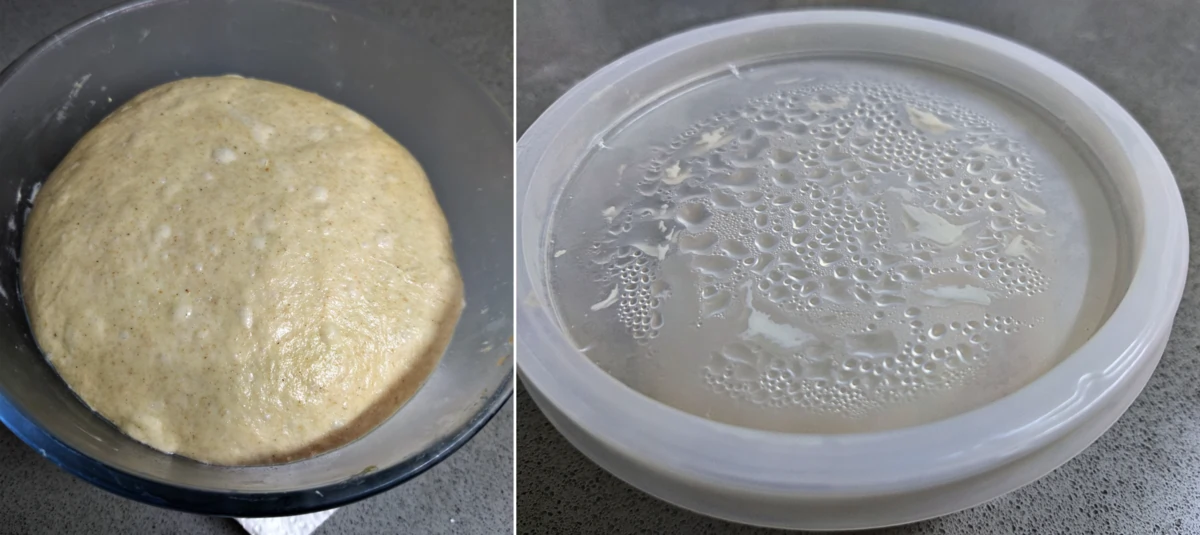
On the right: condensation on the lid of a container holding cold-fermented dough.
This page is part of PizzaBlab’s Pizza Making Troubleshooting Guide. It provides a practical overview of the most common causes for this problem, each with a brief explanation, actionable solution, and links to related articles for deeper understanding.
The sections are listed from most to least likely, meaning the first cause typically represents the most common reason for this issue, with likelihood decreasing as you move down the list. That said, several causes can often overlap or share similar likelihoods – it’s ultimately up to your process to identify which factors are at play.
Cause 1: Water (Condensation) Drops Formed on the Lid of the Container, Potentially Dripping Back onto the Dough
Explanation:
Condensation forms when warm air inside the dough container comes into contact with the cold(er) lid of the container. The sudden temperature difference causes moisture in the warm air to turn into water droplets, which can collect on the lid and eventually drip down onto the dough, creating white, wet spots on the dough surface.
Solution:
Place the container with the dough in the fridge partially covered for one to two hours to allow it to gradually cool down. Once the dough has sufficiently cooled, you can close or seal the container and continue fermentation as usual.
Alternatively, you can place a damp towel over the container until it cools – this will keep warm air out while also absorbing any condensation that forms.
Read More:
Additional Notes / Information
When the dough is bulk fermented in the fridge, condensation is generally not a significant issue, as the dough will later be divided and shaped into balls, allowing any surface moisture to be “reincorporated” into the dough.
However, when the dough ferments in the fridge as individual balls, water droplets dripping onto the dough can lead to several negative effects:
- The drops of water can make the dough sticky. The water may remain on the surface or be absorbed unevenly over time, creating wet spots.
- During baking, the water in these wet spots evaporates, potentially causing large bubbles to form, either on the pizza base or around the crust.
- When stretching the dough into a pizza base, dusting flour can stick to these wet areas, leading to flour buildup. During baking, this excess flour may burn and create a bitter taste.
- The dough may become stickier and harder to handle, increasing the risk of it sticking to the work surface or pizza peel.
← Back to PizzaBlab’s Troubleshooting Index
Enjoy the content on PizzaBlab? Help me keep the oven running!