
Why Your Pizza Crust is Pale and Lacks Browning [Causes & Solutions]
A pizza crust that bakes up pale, dull, or lacking deep color is a sign of inhibited chemical reactions, leaving the final pizza looking unappetizing. This is caused by a failure to achieve the Maillard Reaction and/or caramelization, which is nearly always a result of low available sugar content in the dough or improper oven temperature/settings. This page details the exact causes and provides actionable solutions for achieving a perfectly browned crust
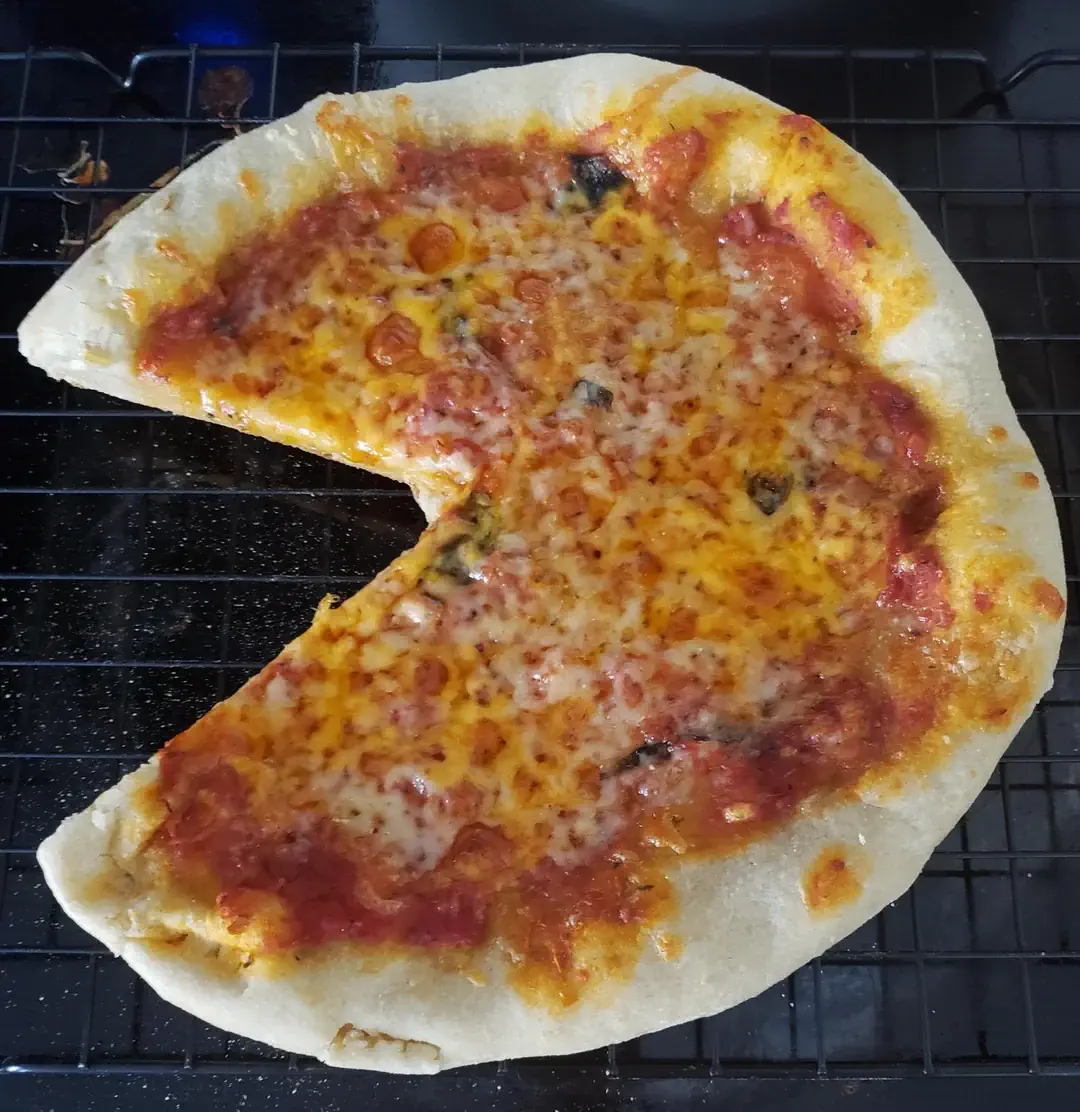
This page is part of PizzaBlab’s Pizza Making Troubleshooting Guide. It provides a practical overview of the most common causes for this problem, each with a brief explanation, actionable solution, and links to related articles for deeper understanding.
The sections are listed from most to least likely, meaning the first cause typically represents the most common reason for this issue, with likelihood decreasing as you move down the list. That said, several causes can often overlap or share similar likelihoods – it’s ultimately up to your process to identify which factors are at play.
Cause 1: The Dough Is Either Over- or Under-Fermented
Explanation:
Dough that is over- or under-fermented lacks the residual sugars needed for proper browning.
Solution:
Bake the dough at its optimal fermentation point – neither over- nor under-fermented. Use PizzaBlab’s dough calculator to achieve the best fermentation results based on your desired fermentation conditions (time and temperature).
Read More:
- The Dough Ferments Too Slowly or Not at All (Under-Fermentation) / The Dough Ferments Too Quickly or Is Over-Fermented
- Residual Sugar and Its Effect on Browning
- Breakdown of Starch in the Dough into Simple Sugars Used as Food by the Yeast
- How to Tell if the Dough is Ready for Baking: 4 Dough Fermentation Tests
Cause 2: Incorrect Flour Choice (Flour With Low Enzymatic Activity – Especially When Baking in a Home Oven)
Explanation:
Flours with low enzymatic activity (such as most Italian flours) brown more slowly and are less suitable for the lower temperatures typical of home ovens.
Solution:
Switch to a malted flour with higher enzymatic activity, or add sugar (see next section) or diastatic malt powder to improve browning.
Read More:
- Enzymatic Activity in Flour and Choosing the Right Flour for Your Baking Temperature
- Enzymatic Activity in Italian Flours
- Diastatic Malt Powder in Pizza Dough: What It Is, What It Does, and How to Use It for Better Pizza
Cause 3: The Dough Lacks Sugar
Explanation:
Sugar promotes and accelerates browning.
Solution:
Add 1–3% sugar (in baker’s percentage) to the dough to promote browning.
Read More:
Cause 4: Using a Preferment or Sourdough Starter
Explanation:
Preferments and sourdough can inhibit browning because the higher acidity of the dough slows the Maillard reaction.
Solution:
If browning is significantly reduced, add sugar or diastatic malt powder to the dough, or use a smaller percentage of preferment.
Read More:
Cause 5: Improper Baking Settings (Insufficient Top Heat)
Explanation:
Baking settings such as temperature, oven position, baking mode, or baking time directly affect browning. Finding the ideal settings for your equipment is key to achieving proper browning.
Solution:
Find the ideal baking conditions in your oven to balance the top and bottom heat. This can be achieved by:
- Baking at a higher temperature.
- Placing the pizza on a higher rack, close to the top heating element (if your oven has one) to increase radiant heat exposure and promote quicker browning of the top.
- Adjusting the oven settings – using convection mode or the broiler can promote top browning.
- Baking for a longer time to allow the top to brown more.
Read More:
- The Importance of Balancing Top and Bottom Heat in Pizza Baking
- How to Bake Pizza in a Home Oven: Everything You Need to Know [A Practical Guide]
Cause 6: Oven Not Sufficiently Preheated
Explanation:
If the oven and baking surface are not fully preheated and heat-saturated, the dough will not bake or brown properly.
Solution:
Preheat the oven and baking surface for at least 30 minutes or until fully heat-saturated. The exact time depends on the oven type and target baking temperature.
Read More:
Cause 7: For Baking in a Wood-Fired Oven – Dough Placed Too Far from the Flame, or Flame Intensity Too Low
Explanation:
The closer the pizza is placed to the flame, and the higher the flame intensity, the faster it will brown (and vice versa).
Solution:
Position the pizza closer to the flame or raise the flame intensity to increase radiant heat exposure and promote quicker browning.
Read More:
Additional Notes / Information
In most cases, inadequate browning originates from the dough itself – whether it is over- or under-fermented, made with unsuitable flour, or lacking in sugar.
Before considering other factors, first ensure that the dough is baked at its optimal fermentation point.
A common home-bakers’ practice is brushing oil onto the crust before baking to promote browning. This “trick” is purely cosmetic and does not produce the flavor benefits associated with proper Maillard reaction. You will not find any high-quality pizzeria that uses this method to achieve proper browning.
The goal is for the dough to brown naturally during baking, which greatly enhances its flavor through Maillard reaction – something that cannot be achieved through ‘artificial’ browning with oil brushing. If oil must be applied to achieve color, it indicates an issue with the dough or the baking conditions.
← Back to PizzaBlab’s Troubleshooting Index
Enjoy the content on PizzaBlab? Help me keep the oven running!


