
Why Pizza Dough Overheats During Mixing, and How to Fix It [Causes & Solutions]
Final Dough Temperature (the temperature of the dough at the end of mixing) has a direct impact on the overall rate of fermentation. Dough that got too warm during mixing is almost always a result of excessive friction, high-temperature ingredients, or improper mixing speed/duration. This page details the exact causes and provides actionable solutions to control the dough’s temperature
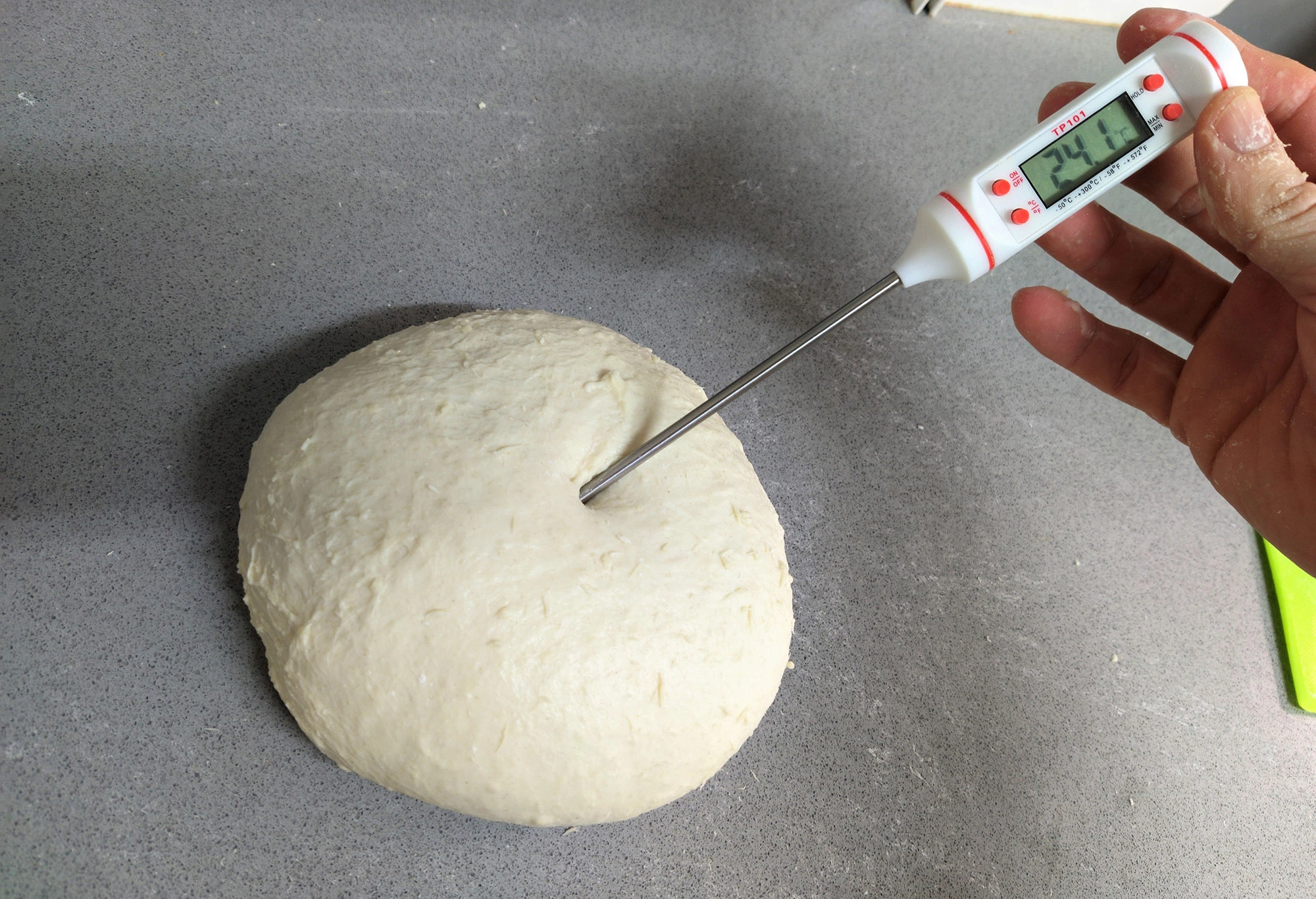
This page is part of PizzaBlab’s Pizza Making Troubleshooting Guide. It provides a practical overview of the most common causes for this problem, each with a brief explanation, actionable solution, and links to related articles for deeper understanding.
The sections are listed from most to least likely, meaning the first cause typically represents the most common reason for this issue, with likelihood decreasing as you move down the list. That said, several causes can often overlap or share similar likelihoods – it’s ultimately up to your process to identify which factors are at play.
Cause 1: Excessive Friction During Kneading Raised the Dough Temperature
Explanation:
Excessive friction during kneading, either from kneading too long and/or using a mixer that generates high friction – can cause the dough temperature to rise too much.
Solution:
Control the final dough temperature by adjusting the temperature of the water and/or flour (see detailed guidance in the articles below).
Read More:
- Final Dough Temperature (Finished/Desired Dough Temperature): Why It’s Important and How to Control It
- Understanding Friction Factor in Dough Mixing/Kneading
- Desired Dough Temperature Calculator
Additional Notes / Information
In general, there’s no issue with finishing kneading when the dough temperature reaches up to 32°C (90°F). The common claim that gluten “starts breaking down” above 27°C (81°F) is a myth.
While gluten-forming proteins begin to lose some of their bonding ability around 32°C, that’s the upper limit to avoid – not a point of immediate damage. Even if the dough slightly exceeds this temperature, it’s not catastrophic.
Do keep in mind that a higher final dough temperature accelerates overall fermentation, so the higher the final dough temperature – the faster the dough will ferment.
Placing a dough with a too high final dough temperature in the fridge is NOT an effective way to “fix” an overheated dough. Dough mass (in either bulk or balls) cools very slowly, typically taking several hours to drop in temperature, especially in larger masses. As a result, the effects of a high final dough temperature – mainly accelerated fermentation – will still occur even after immediate refrigeration.
What you can try (though it’s not highly recommended) is flattening the dough into a thin layer and placing it in the fridge — this can help it cool more quickly until it reaches the target final dough temperature.
← Back to PizzaBlab’s Troubleshooting Index

Enjoyed this article? Join the BLAB
Unlock the Key Takeaways above and enjoy a 100% clean, ad-free experience across the entire site.



![Why Your Pizza Crust is Dry and Crumbly [Causes & Solutions]](https://www.pizzablab.com/wp-content/uploads/2025/11/pizza-making-troubleshooting-cover-768x561.webp)