Enzymatic Activity (Alpha-Amylase) in Flour: Understanding its Impact on Dough and Baking
Enzymatic activity, specifically diastatic activity, is the process by which enzymes in flour convert starch into fermentable sugars. This process is the primary driver of yeast fermentation and crust browning. This article will explain the role of alpha-amylase in starch breakdown, how enzymatic levels are measured using the Falling Number test, and how flour selection affects the way your crust browns
Understanding Enzymatic (Diastatic) Activity in Flour
Before diving into specific enzymes, it is important to understand the concept of diastatic activity.
In the context of flour, this term refers to the collective power of enzymes to convert starch into fermentable sugars. This process is the engine behind both fermentation and crust browning.
The level of enzymatic activity in flour is not a fixed constant; it is a delicate balance. If activity is too low, the dough will struggle to rise and brown; if it is too high, the dough structure will collapse into a sticky mess.
Most of this activity is driven by a specific group of enzymes known as amylases. While there are several types, Alpha-Amylase is considered the “primary” enzyme because it initiates the entire starch breakdown process, effectively setting the pace for how the dough will behave from the moment water hits the flour until the pizza leaves the oven.
Alpha-Amylase: The Catalyst for Sugar Production
Alpha-amylase is a crucial enzyme found in flour that directly affects the quality of dough and baking. Its main function is to convert starch into sugars, which serve as the primary food source for yeast.
Furthermore, these sugars remain in the dough as residual sugar, which is essential for achieving proper browning during the baking process.
The Process of Diastatic Activity (Starch Breakdown)
The transformation of raw flour into a fermentable dough follows a specific chemical chain reaction:
- Damaged Starch: Flour is primarily composed of microscopic starch granules. During the milling process, some of these granules become physically damaged, “opening” them up and exposing them to enzymatic action.
- α-Amylase (“The Initiator”): Alpha-amylase enzymes target these damaged starch molecules, breaking the long, complex chains into medium-sized molecules called dextrins.
- β-Amylase (“The Refiner”): Once the alpha-amylase has created dextrins, beta-amylase enzymes (which are naturally abundant in flour) convert those dextrins into a disaccharide called maltose.
- Yeast Consumption: Finally, the yeast and/or bacteria breaks down the maltose into glucose, which it consumes to produce carbon dioxide (for rise) and alcohol (for flavor development).
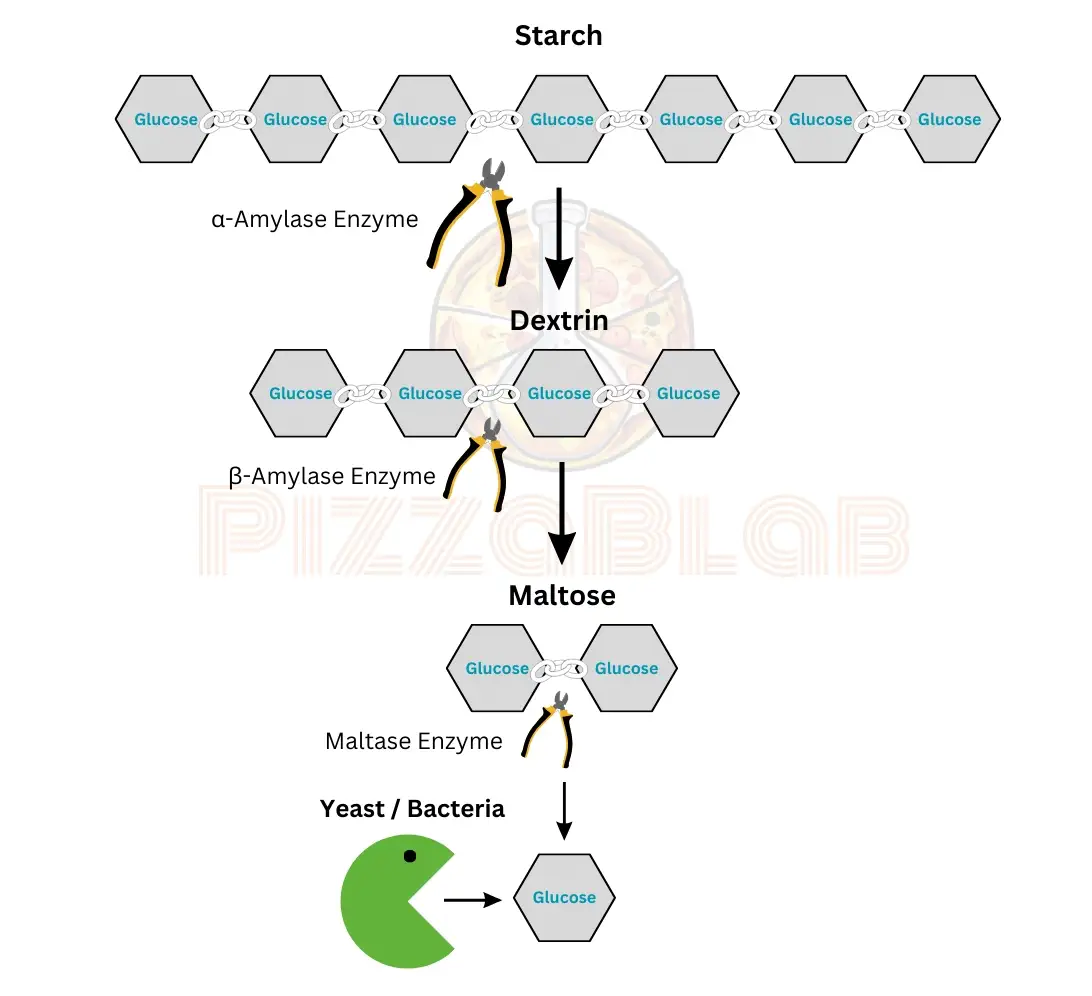
How Amylase Enzymes Work: The “Cutter” vs. The “Nibbler”
To understand why alpha-amylase is so important, we have to look at how these enzymes physically interact with starch chains:
- β-Amylase (The End-Nibbler): Beta-amylase is restricted in it’s action; it can only break off units of maltose from the ends of a starch chain. It cannot break the middle of a long chain.
- α-Amylase (The Random Cutter): Think of alpha-amylase as a pair of scissors that can cut a long starch chain anywhere along its length. By breaking the chain at random points in the middle, it rapidly turns one giant molecule into many smaller “dextrin” fragments. This creates a massive increase in the number of available “chain ends.”
Why Alpha-Amylase is the “Bottleneck” for Starch Breakdown
This difference in “cutting style” is exactly why alpha-amylase is the bottleneck of the entire operation.
In normal flour, beta-amylase is naturally abundant, but it is “hungry” for chain ends to work on. If Alpha-Amylase activity is low, the starch chains remain long and unbroken, leaving beta-amylase with very few ends to “nibble” on. The result is a very slow production of maltose.
However, as soon as alpha-amylase begins “chopping” those long chains into smaller pieces, it creates thousands of new ends for the beta-amylase to attack simultaneously.
This is why the rate of sugar production, and therefore the speed of your fermentation and the depth of your crust color, is primarily dictated by the level of alpha-amylase activity.
Residual Sugar and the Maillard Reaction
The glucose and maltose produced during the above process do more than just feed the yeast.
Any sugar not consumed by the yeast remains in the dough as residual sugar. These sugars are the primary fuel for the Maillard reaction – the chemical interaction between amino acids and reducing sugars that occurs under heat. This reaction is what gives a pizza or bread crust its rich brown color, iconic charred “leopard spotting,” and deep, complex aromas.
The “Baking Boost”
It is a common misconception that sugar production stops once the pizza enters the oven. In fact, enzymatic activity significantly accelerates during the initial stages of baking.
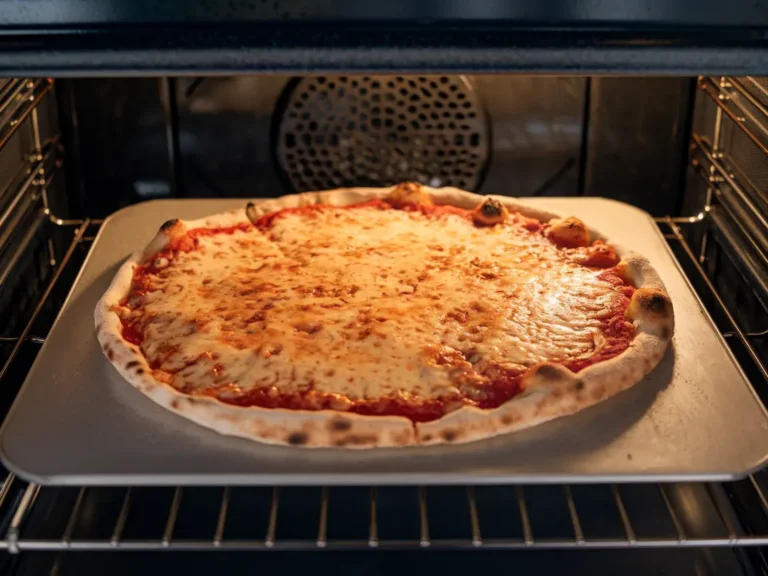
As the dough temperature rises, alpha-amylase activity peaks, working at a maximum pace to break down starch into fresh sugars. This “last-minute” surge provides a massive boost of sugar that is immediately available for the Maillard reaction.
The “Volume Knob” of Flavor and Browning
Consequently, the level of alpha-amylase activity in your flour/dough acts as the direct “volume knob” for the color and flavor profile of your finished crust.
- High Activity: More starch is converted to sugar, leading to rapid browning and a darker, more complex crust.
- Low Activity: Fewer sugars are produced, often resulting in a pale, “anemic” crust that lacks both color and flavor.
The Falling Number Test: Assessing Enzymatic Activity
Since we cannot see enzymes with the naked eye, the flour industry uses a standardized physical test to measure alpha-amylase activity: the Falling Number (FN) test.
This test measures the effect of alpha-amylase on a heated mixture of flour and water (slurry).
How the Test Works
The test relies on a simple principle: Alpha-amylase liquefies starch.
- A flour and water slurry is heated in a test tube, causing the starch to gelatinize into a thick paste.
- A weighted stirrer is placed at the top of the tube.
- As the alpha-amylase breaks down the starch, the paste becomes thinner (less viscous).
- The “Falling Number” is the total time in seconds it takes for the stirrer to fall through the paste to the bottom.
Interpreting the Results
Falling Number values are inversely related to the enzyme concentration:
- Lower FN Value = Higher Activity: The enzymes thinned the paste quickly, so the weight “fell” fast.
- Higher FN Value = Lower Activity: There were fewer enzymes to break down the starch, so the paste remained thick, and the weight fell slowly.
Values typically range from 60 (extremely high activity) to 400+ (extremely low activity).
For standard bread and pizza flours, an FN value between 220–260 is generally considered the “sweet spot.”
Falling Number Reference Table
| Falling Number (Seconds) | Enzymatic Activity | Impact on Baking |
| 150 and below | Very High | Usually indicates sprouted wheat. Produces a sticky, gummy crumb that feels “underbaked.” Not suitable for use unless blended with a high-FN flour. |
| 150 – 220 | High | Higher than normal activity. May require “correction” by blending or specialized baking techniques to manage dough stickiness. |
| 220 – 280 | Ideal | The “Golden Zone” for most baking. Provides balanced fermentation and optimal browning. |
| 280 and above | Low | Low activity. Ideal for high-temperature baking (350°C / 660°F and above) to prevent excessive charring, but may require longer fermentation to develop flavor. |
“Malted” vs. “Unmalted” Flour
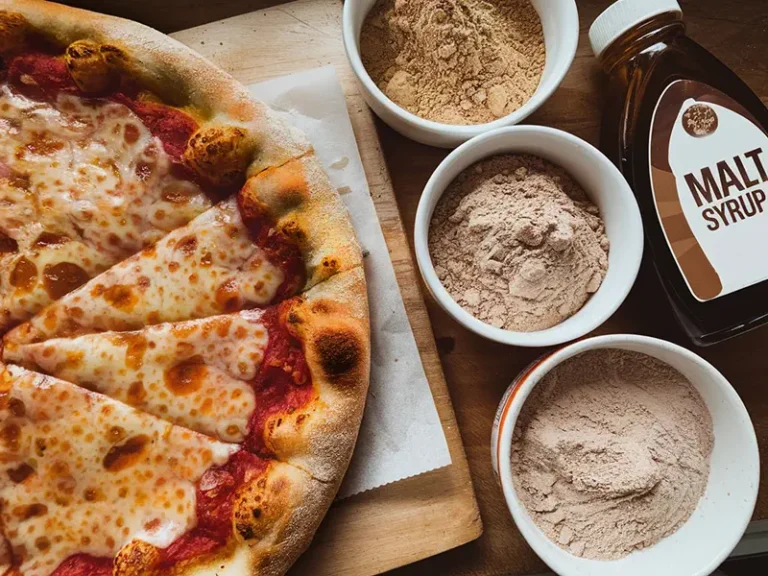
In the United States, flour that has been supplemented with a-amylase enzymes at the mill is officially labeled as “malted flour.” This typically indicates high enzymatic activity and consistent browning.
Conversely, “unmalted” flour usually suggests lower enzymatic activity.
Note: The “unmalted” label is purely a statement about additives, not the actul measurement of the Falling Number. A flour can have high natural enzymatic activity due to the wheat’s growing conditions or harvest state without the mill adding any barley malt or a-amylase. Therefore, while “unmalted” usually correlates with lower activity, it technically only means that no external enzymes were added during production.
Enzymatic Activity in Italian Flour
In Italy, it is customary not to treat flour with alpha-amylase. As a result, the majority of Italian flours (including most 00 flours) are “unmalted” and have naturally low enzymatic activity (typically between 300–400 FN).
This is why Italian flour is typically ideal for traditional Neapolitan pizza baked at extreme temperatures of 430°C–480°C (800°F–900°F).
The naturally low alpha-amylase levels in Italian flour prevent the crust from browning too much in the intense heat. Conversely, using a high-enzymatic (“malted”) flour at these temperatures will result in a crust that is over-browned, if not completely charred, before the dough is fully cooked.
Key Takeaways
- Starch Breakdown:
Alpha-amylase is the primary catalyst for starch breakdown. It acts like a “random cutter,” breaking long starch chains into smaller pieces (dextrins) so that other enzymes can finish the job of creating yeast food. - The “Volume Knob” for Color:
Residual sugar – the “leftover” sugar after the yeast has eaten – is what creates the brown color and charred spots on your crust. More alpha-amylase activity equals more browning. - The Baking Surge:
Amylase activity doesn’t stop in the proofing container; it peaks during the initial minutes of baking, providing a final surge of sugar that intensifies the Maillard reaction. - Falling Number (FN):
This test measures enzyme concentration. Remember that the numbers are inverted: a low FN (e.g. 150) means high activity, while a high FN (e.g. 350) means low activity. - Match Flour to Temperature:
High-heat ovens (400°C+) require low-activity, “unmalted” flours (high FN) to avoid burning. Lower-temperature home or deck ovens (250°C–350°C) benefit from “malted” flours (lower FN) to achieve proper browning. - Malted vs. Unmalted Flour:
“Malted” means enzymes were added at the mill. “Unmalted” just means no additives were used, though the flour may still have natural enzymatic activity depending on how the wheat was harvested.

Enjoyed this article? Join the BLAB
Unlock the Key Takeaways above and enjoy a 100% clean, ad-free experience across the entire site.