Pizza Dough Formulas for All Common Pizza Styles (in Baker’s Percentages)
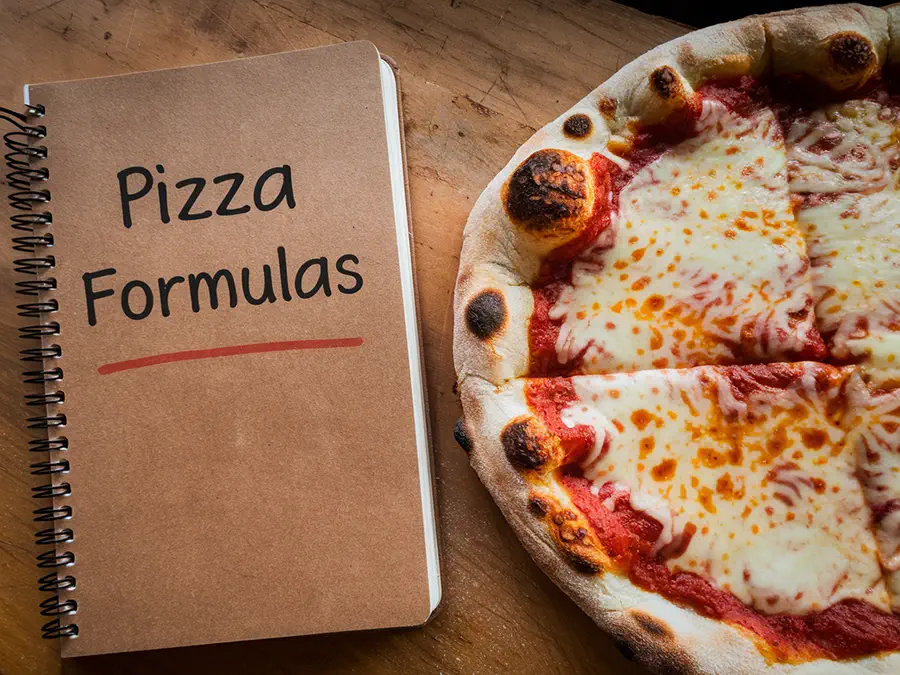
This page features a collection of pizza dough formulas, in baker’s percentages, for all common pizza types
Introduction and General Guidelines
Below, you will find dough formulas for different types of pizza, written in baker’s percentages, for use with PizzaBlab’s pizza dough calculator.
The formulas aim to stay as authentic as possible to their original sources and provide a reliable starting point for making each style of pizza. Adjustments can, of course, be made to suit your preferences.
For detailed recipes for most of the pizzas mentioned, visit PizzaBlab’s recipe page.
General Guidelines
Hydration
- Most pizzas work best with a dough hydration of 55–62%.
Salt
- Recommended: 2–3% for all pizza types.
- Avoid going below 1.5%, as this can weaken gluten structure and dough strength.
- Salt adjustments affect flavor, so modify according to your taste.
- Learn more about salt’s effects on dough in this article: The Importance of Salt in Pizza Dough: Understanding Its Roles and Impact.
Sugar
- Optional for all pizzas.
- Primarily used to enhance crust browning.
- Learn more about sugar’s effects on dough in this article: Sugar in Pizza Dough Explained: How It Affects Dough [Why & When to Use It].
Oil
- Optional ingredient.
- Adds tenderness to the dough and softens the crumb.
- Learn more about oil’s role in pizza dough in this article: Oil in Pizza Dough Explained: Why to Use It and How It Affects the Dough [Texture, Flavor & More].
Yeast
- Yeast quantity depends on dough amount and fermentation conditions (duration and temperature), not on pizza type.
- For more information, check this article: How Much Yeast to Use in Pizza Dough: Factors Affecting Fermentation Rate.
Preferment
- Can be used for any pizza style, with typical amounts ranging from 5–30%.
- Learn more about preferments in this article: Preferment in Pizza Dough: The Ultimate Guide [Definitions, Types, Guidelines, and More].
Pizza Dough Formulas
New York Style Pizza
- Hydration: 57-60%
- Salt: 2-2.5%
- Sugar: 0-2%
- Oil: 0-3%
Click here for general information on New York style pizza.
New Haven Pizza
- Hydration: 65-68%
- Salt: 2-2.5%
- Sugar: 0-2%
- Oil: 0-3%
Click here for general information on New Haven pizza.
Classic Neapolitan Pizza
- Hydration: 57-62%
- Salt: 2.5-3%
- Sugar: 0%
- Oil: 0%
Click here for general information on Neapolitan pizza.
Modern Neapolitan Pizza (‘Napoletana Contemporanea’)
- Hydration: 70-80%
- Salt: 2.5-3%
- Sugar: 0%
- Oil: 0%
Pizza Tonda Romana
- Hydration: 55-58%
- Salt: 2-3%
- Sugar: 0%
- Oil: 1-3% (facilitates dough stretching)
Click here for general information on pizza tonda romana.
Detroit Style Pizza
- Hydration: 65-70%
- Salt: 2-2.5%
- Sugar: 0-2%
- Oil: 1-3%
Click here for general information on Detroit style pizza.
Sicilian Pizza
- Hydration: 57-60%
- Salt: 2-2.5%
- Sugar: 0-2%
- Oil: 1-3%
Click here for general information on Sicilian pizza.
Pizza al Taglio Romana
- Hydration: 75-80%
- Salt: 2.5-3%
- Sugar: 0%
- Oil: 0-3%
Click here for general information on pizza Al taglio romana.
Pizza Pala
- Hydration: 70-80%
- Salt: 2.5-3%
- Sugar: 0%
- Oil: 0-3%
Click here for general information on pizza pala.
Pizza Pinsa
- Hydration: 75-80%
- Salt: 1.5-2%
- Sugar: 0%
- Oil: 1-1.5%
Click here for general information on pizza pinsa.
Chicago Deep Dish Pizza
- Hydration: 45-50%
- Salt: 1.5-2%
- Sugar: 1-2%
- Oil (or butter): 15-20% (essential for a crumbly, shortcrust-like texture)
Click here for general information on Chicago deep dish pizza.
Cracker Style Pizza
- Hydration: 35-50%
- Salt: 1.5-2%
- Sugar: 0-2%
- Oil: 3-10% (facilitates dough stretching and helps achieve a cracker-like, crumbly texture)
Click here for general information on cracker style pizza.
Industrial Style Pizza (Pizza Hut, Domino’s, Papa John’s, etc.)
- Hydration: 55-58%
- Salt: 2-2.5%
- Sugar: 1-3%
- Oil: 1-5%
Click here for general information on American/industrial style pizza.
Midwest Style Pizza (Bar Pie / Tavern Pizza)
- Hydration: 50-60%
- Salt: 2-2.5%
- Sugar: 0-2%
- Oil: 0-3%
Click here for general information on Midwest style pizza.
Pizza Spontini (Milanese Pizza Chain)
- Hydration: 66%
- Salt: 1.5%
- Sugar: 0%
- Oil: 0%
Enjoy the content on PizzaBlab? Help me keep the oven running!