
Why Pizza Dough Gets a Dry or Crusty Surface, and How to Fix It [Causes & Solutions]
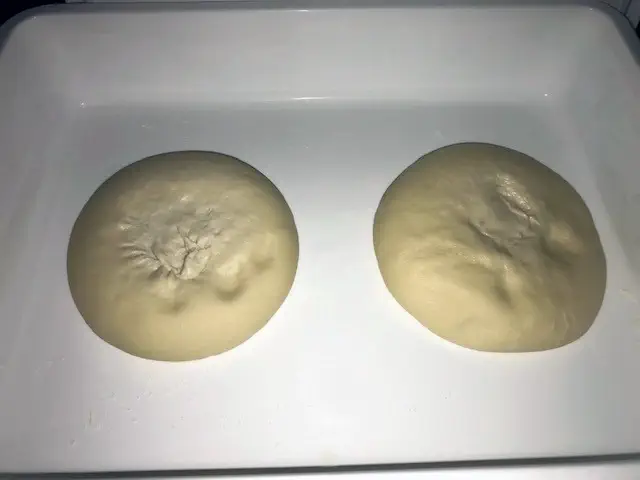
A dried-out, crusty surface on your pizza dough prevents proper stretching, often leading to tears and/or uneven thickness in the final crust. This is almost exclusively an environmental problem caused by air exposure. This page details the exact causes and provides actionable solutions to prevent the surface of the dough from drying out during fermentation
This page is part of PizzaBlab’s Pizza Making Troubleshooting Guide. It provides a practical overview of the most common causes for this problem, each with a brief explanation, actionable solution, and links to related articles for deeper understanding.
The sections are listed from most to least likely, meaning the first cause typically represents the most common reason for this issue, with likelihood decreasing as you move down the list. That said, several causes can often overlap or share similar likelihoods – it’s ultimately up to your process to identify which factors are at play.
Cause 1: The Dough Was Exposed to Air for Too Long, or the Fermentation Container Was Not Airtight
Explanation:
The dough was exposed to air for too long, causing its surface to dry out and form a dry skin.
Solution:
Use an airtight container for fermentation to prevent the dough from drying.
Additional Notes / Information
If the dough surface has dried, lightly moisten it and allow some time for the dry layer to absorb the water and soften.
If a thick, hard crust has formed, the dough may be difficult to shape, as dry areas will ‘break’ instead of stretching.
← Back to PizzaBlab’s Troubleshooting Index
Enjoy the content on PizzaBlab? Help me keep the oven running!

![Why Your Pizza Crust is Dry and Crumbly [Causes & Solutions]](https://www.pizzablab.com/wp-content/uploads/2025/11/pizza-making-troubleshooting-cover-768x561.webp)


